1)
Introduction
1)
Introduction
In the second half of
the twentiest century the West had to face a flood of gurus paying the
westerners back for their colonial superiority, which was to them
primarily the result of a lack of spiritual discipline. The complete of
twentiest century warfare can be understood as a karmic reaction to the
western colonial mentality: the oppressed peoples couldn't make
Christianity proselytizing pay back for all their atrocities, and so
God presented us with an evening of the balance of our own making: our
imposition went against ourselves, against the Jews and against Western
'decay' (America). This madness was not just fascism, it was a sincere
desire for a strong and inspiring cultural lead. The West was craving
to be elevated above its primitive medieval culture of human exploit,
its lack of true sophistication and aryan, read civilized, human
selfrespect. It turned into a show of false ego with false authority:
racism and dictature. And this started long before the twentiest
century: it was there ever since the Middle Ages as a vague concept of
reformation and enlightenment. Truly the gurus knew how to state the problem
and clarify the subject of enlightenment and reformation: enlightenment is according to many of them
the result of forsaking desire and reformation is nothing but the
essence of religion: to be born again to spiritual values in stead of
the materialist sex and money walk of life with its false authority.
So what about these
gurus who apparently had a refreshing look on our pitiful and
troublesome concepts of enlightenment and reformation: what is the
essence of their teaching and what is the practical consequence?. And
how does it compare to the present day state of affairs as evidenced by
this site The Order of Time e.g., and how does it relate to the future?
|
|
2) The
essentie van de Leringen, hun Gevolgen en Hun Relatie tot de Huidige
Srand van Zaken en de Toekomst
|
There are several
issues here to be mentioned: 1) the personal/impersonal controversy of
theology, 2) the system of values and grace, 3) the nature and purpose
of discipleship and discipline itself, 4) the nature of illusion and
attachment, and the final reality of liberation. Also 5) the concept of
reincarnation is of importance to the development of western concepts
of time (as can be observed at The Order of Time).
a) The personal/impersonal
controversy of theology
The gurus brought a
sense of peace and happiness to the West unknown before: they painted a
reality pink and happy as a puppy that would exist as a real time
heaven on earth. With drugs and free sex, we thought, we could have an
illegitimate preview. Their grace seemed to be infinite; as long as
they were respected we could have drugs  (Shivavatar Babaji was in favor of hasj) and free sex for
spiritual purposes (Osho; Shree Rajneesh) to our own desire. As no one else they
understood that prescription of the escapist symptom was the best cure,
not repression with dogma and commandments. They were the wisdom and
freedom we were looking for, they were the fathers of the New Age , the sexual revolution and the restoration
of our fallen
prewar theosophical exercises in eastern philosophy (The Leader Blavatski was fond of eating meat and there was mention of fraud and homosexuality as well of racial theory
about them).
(Shivavatar Babaji was in favor of hasj) and free sex for
spiritual purposes (Osho; Shree Rajneesh) to our own desire. As no one else they
understood that prescription of the escapist symptom was the best cure,
not repression with dogma and commandments. They were the wisdom and
freedom we were looking for, they were the fathers of the New Age , the sexual revolution and the restoration
of our fallen
prewar theosophical exercises in eastern philosophy (The Leader Blavatski was fond of eating meat and there was mention of fraud and homosexuality as well of racial theory
about them).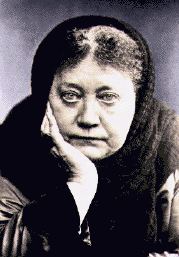
But soon there appeared
clouds at the horizon of the postwar new enlightenment: it was not just
the Vietnam war and the ever increasing materialist desire of the
Westerner. It was not just the failure of many people adhering who
turned out to be nothing but a bunch of losers. It was far more
complicated than that. On closer study these gurus were fighting
themselves: none of them really agreed with the other. Each was
denouncing the other: they wouldn't initiate one another like the
Baptist did with the christian Lord, or respect one another's system
and thus had no
coherence in their preaching to
the West: the best we nowadays can make of it is an idea of multicultural integration where all these gurus
would neatly be classified as
hindu, muslim or buddhist subculture and as such be heartened with an
hour of television and a magazine next to the request to properly
integrate with the local christian community: speak the language and
abide by the mode of cultural conduct. The essence of all the quarrels
among themselves reminded of our own christian quarrels of reformation:
and indeed they preached from their vedic scriptures that it is the
fate of modern man to live the "Age of Quarrel" also called Kali Yuga or The Iron Age (modern ever since
the fall down of vedic culture after the disappearance of the Lord of -
bhakti -Yoga, Krishna, with the great 'world'war of the Mahâbhârata).
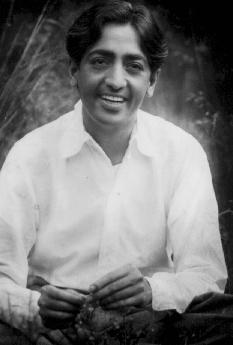 Some of the gurus stressed the impersonal
liberation out of any false authority of ego and teachers (gurus Krishnamurti and Bhagavan Sree Rajneesh/Osho). Others stressed the importance of devotion
to the guru and the personal Lord (e.g. gurus Swami Prabhupâda and Bhagavân
S'rî Sathya Sai Baba).
These two schools of thought: the personalists and impersonalists where
both characterized by the philosophy of illusion: the transitory world
of matter had, much like the Buddhist philosophy, to be forsaken as
illusory and one had to live up to a concept of rebirth in a spiritual
world that reminded much of our christian idea of heaven. There was no clear idea about this
reality of heaven: how could that
be a stable reality apart from some cult of drugs, sex or meditation?
Love is the solution. Of course hate wouldn't, but what did this really
add to our christian doctrines? In the christian monasteries we were
vegetarian already and also believers in a separate heaven or community
making a separate world of religious virtue. That wouldn't be the
solution to the bewildering reality of recurring warfare and collective
madness as we never had before in the twentiest century. Somehow our
christian culture had culminated to an aggression and selfdestruction
that had to be stopped absolutely or else we would lose the whole
planet all together. Cults of meditation making separate heavens were
nothing new and thus more a reaction to than a solution for the problem
of our increasing destruction. Many psychologists theorized and
formulated adaptations of the teachings as gestalt therapy, new age
therapies or reformulations of psychoanalysis in the form of some kind
of cognitive and behavioral restructuring approach. The scientific answer of the
behavioral sciences would rescue and replace this apparently futile
guru-attempt to save the world
from total selfdestruction.
Some of the gurus stressed the impersonal
liberation out of any false authority of ego and teachers (gurus Krishnamurti and Bhagavan Sree Rajneesh/Osho). Others stressed the importance of devotion
to the guru and the personal Lord (e.g. gurus Swami Prabhupâda and Bhagavân
S'rî Sathya Sai Baba).
These two schools of thought: the personalists and impersonalists where
both characterized by the philosophy of illusion: the transitory world
of matter had, much like the Buddhist philosophy, to be forsaken as
illusory and one had to live up to a concept of rebirth in a spiritual
world that reminded much of our christian idea of heaven. There was no clear idea about this
reality of heaven: how could that
be a stable reality apart from some cult of drugs, sex or meditation?
Love is the solution. Of course hate wouldn't, but what did this really
add to our christian doctrines? In the christian monasteries we were
vegetarian already and also believers in a separate heaven or community
making a separate world of religious virtue. That wouldn't be the
solution to the bewildering reality of recurring warfare and collective
madness as we never had before in the twentiest century. Somehow our
christian culture had culminated to an aggression and selfdestruction
that had to be stopped absolutely or else we would lose the whole
planet all together. Cults of meditation making separate heavens were
nothing new and thus more a reaction to than a solution for the problem
of our increasing destruction. Many psychologists theorized and
formulated adaptations of the teachings as gestalt therapy, new age
therapies or reformulations of psychoanalysis in the form of some kind
of cognitive and behavioral restructuring approach. The scientific answer of the
behavioral sciences would rescue and replace this apparently futile
guru-attempt to save the world
from total selfdestruction.
But the guru attempts were not as
futile as the behavioral sciences would picture. The psychologists themselves overflowed
with denial and repression making their own rationalist ego's of false
spiritual authority we already knew of our prewar fallen attempts to
integrate eastern and western philosophy. The gurus made an essential contribution to
our western culture in abridging the gap between religion and science in the behavioral sciences themselves.
They clarified in their quarrels about the personal/impersonal approach
that a school of personal and confidential teaching is there to realize
that the mature
state of selfrealization was founded on spiritual discipline and
individual aligning to the impersonal formless God above us all more than on religious rituals, community
gathering, religious dogma or psychological egodrives against it. With
this they as
well confirmed the psychologists
who declared all religion superstitious, regressive or falsifying, as well as denounced them in being undisciplined themselves: how
can one ever preach spiritual, mental sanity without ever preaching or
teaching a proper valuesystem and discipline? Mere rationalizing cognitive
restructuring was not a simple valuefree affair but more a conversion
to classical spiritual values.
This was the merit of the gurus: they declared the ego holy fighting it; the guruparadox of teaching. The ego had to
be aligned with the soul and not to be destroyed or elevated to the
status of worship. We had to balance to spiritual values and realize
our mature selfresponsibility of being sane ego's to a virtuous
liberated and disciplined soul.
All this could be
recognized on the
condition of one rule: confidential information cannot be disclosed. In fact, not even the name of our christian
Lord can be betrayed although everyone knows Him. The ego purified
cannot dominate any longer in the postmodern society: it may freak, it
may scream and misbehave, but it may not dominate for conquering the
world and warfare any longer. We cannot afford us an absolute of whatever
ego, or bodily fixation, be it holy or unholy. Thus the conflict between the personal and
impersonal doctrines is solved: the message is more important than the
messenger, although also about this there would exist and again will be
debates and quarrels (as e.g. with of the Marshall Macluhan
ego-age dictum: the medium, read the body of ego, is the message).
Therefore are, with the exception of this article (department
'personal') and the introductions, for most of the content of the
internet site The Order of Time or much of Internet in general, there only pseudonyms and initials as consequent as possible or, philsophically
authentic, no references at all here and there. The modern age of the
rebellious, experimenting and booming naive ego is over, the postmodern multitude that
revives the virtue and values of the selfrealized, restricted and
subservient ego is in.
b) The system of values
and grace
The great importance of
the gurus lies in their preaching of the eternal values. Christianity
celebrated a traditional set of values known as the ten commandments.
The gurus made them comprehensible and attainable: they combined them
into a few basic values that could easily be remembered and would still
make enough of a challenge to find all the other commandments in them
as a natural consequence of spiritual integrity and intelligence. They
for instance did not stress the importance of respecting the parents or
fight the worship of idols. They in fact preached the (temporal)
denouncing of the parental (false) authority and propagated an
instrumental meditation on all forms of God, idols or not. They did
fight fruitive
labor though as an act of the ego
and reserved the profit of creative selfrealization to themselves: only
one can be the leader and teacher. Only in a very limited sense they did
not denounce individual contributions in therapy and research-writings. Most of them have a strict body of
literature and practice to be followed as a school without permitting
further amending to it. Guru Bhagavân Sathya Sai Baba encourages to write books, as long as they
concern him, just like guru Bhagavân S'rî Rajneesh (Osho) encouraged his followers to make therapies
of their own as long as they would accept his own creative findings in
spiritual innovation. In many ways the gurus excelled in propagating
the selfrealization of their pupils without neglecting the importance
of attention for their own teaching. Such was the operation of their
grace which constituted a heavy competition commonly known as the culture of New Age
and modern spiritual psychotherapy
relative to and expanding from the christian doctrine and practice of
gracing the sins.
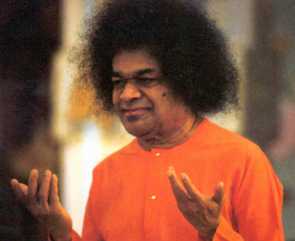 Closing in on the essence of these values
there are several systems that stand out in their clarity of
formulation next to the biblical ten commandments: Bhagavân
Sathya Sai Baba preaches sathya,
prema, dharma and ahimsâ: truth, love, righteous duty
and non-violence that would bring shanti or peace. Yoga
teachers of all kind would preach yama & niyama in general
meaning do's and don'ts to the values of the great (yama-) vow
of ashthângayoga (eightfold yoga): ahimsâ, sathya,
asteya, brahmacârya, aparigraha & yama or non-violence,
truth, non-stealing, celibacy, non-possessiveness and renunciation,
leading to the (niyama) practices of s'aucam, tapas,
svadhyaya, santush and îs'varapranidhâna, or
purity, penance, selfstudy, contentment and service to the Lord. The
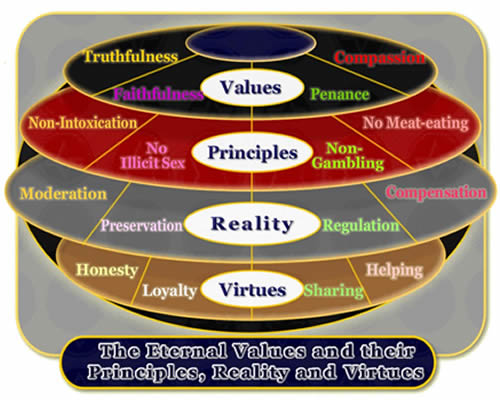
vaishnav school of Swami Prabhupâda preaches dayâ, sathya, tapas &
s'auca or compassion, truthfulness, penance and purity as the
basic values for their regulative principles of respectively not eating
meat fish and eggs, non-intoxication, non-gambling and abstaining from
illicit sex. In sum they improvise all on a basic set of eternal values best
formulated by the vaishnav school and christian-wise recognized as the
commandments of thou shalt not kill, steal, lie and fornicate. The other commandments can be considered
Jewish theological derivatives of these basic eternal general spiritual
values. With guru Bhagavân Sathya Sai Baba truth means not to lie while non-violence
Closing in on the essence of these values
there are several systems that stand out in their clarity of
formulation next to the biblical ten commandments: Bhagavân
Sathya Sai Baba preaches sathya,
prema, dharma and ahimsâ: truth, love, righteous duty
and non-violence that would bring shanti or peace. Yoga
teachers of all kind would preach yama & niyama in general
meaning do's and don'ts to the values of the great (yama-) vow
of ashthângayoga (eightfold yoga): ahimsâ, sathya,
asteya, brahmacârya, aparigraha & yama or non-violence,
truth, non-stealing, celibacy, non-possessiveness and renunciation,
leading to the (niyama) practices of s'aucam, tapas,
svadhyaya, santush and îs'varapranidhâna, or
purity, penance, selfstudy, contentment and service to the Lord. The
vaishnav school of Swami Prabhupâda preaches dayâ, sathya, tapas &
s'auca or compassion, truthfulness, penance and purity as the
basic values for their regulative principles of respectively not eating
meat fish and eggs, non-intoxication, non-gambling and abstaining from
illicit sex. In sum they improvise all on a basic set of eternal values best
formulated by the vaishnav school and christian-wise recognized as the
commandments of thou shalt not kill, steal, lie and fornicate. The other commandments can be considered
Jewish theological derivatives of these basic eternal general spiritual
values. With guru Bhagavân Sathya Sai Baba truth means not to lie while non-violence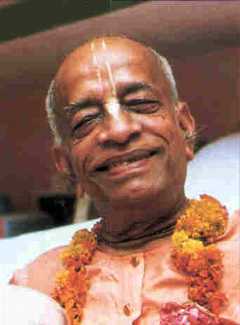 means not to kill [to be a vegetarian]. How
love and duty imply not to fornicate and not to steal one must realize
oneself with him. In eightfold yoga the yama-don'ts imply that
non-violence means not to kill, truth means not to lie, celibacy means
not to fornicate and non-possessiveness and non-stealing that one
wouldn't acquire more than one needs, thus making up the renunciation
of the yama that is almost identical to the vaishnav set of values. The
vaishnav fuses from this yama the niyama service to the
lord, contentment and selfknowledge in one idea of truth or not lying,
thus defining bhakti or devotional service as the true practice.
(compare this to the values of The Order of Time that make up a likewise set next to
derivatives of principles, a compromise of reality and a resultant set
of the virtues of grace: honesty, loyalty, sharing and caring).
means not to kill [to be a vegetarian]. How
love and duty imply not to fornicate and not to steal one must realize
oneself with him. In eightfold yoga the yama-don'ts imply that
non-violence means not to kill, truth means not to lie, celibacy means
not to fornicate and non-possessiveness and non-stealing that one
wouldn't acquire more than one needs, thus making up the renunciation
of the yama that is almost identical to the vaishnav set of values. The
vaishnav fuses from this yama the niyama service to the
lord, contentment and selfknowledge in one idea of truth or not lying,
thus defining bhakti or devotional service as the true practice.
(compare this to the values of The Order of Time that make up a likewise set next to
derivatives of principles, a compromise of reality and a resultant set
of the virtues of grace: honesty, loyalty, sharing and caring).
Many other gurus have
some kind of improvisation on these values (e.g. the alleged Jesus
Christ reborn, the redeemer Maitreya of the Share-movement preaching sharing for its own sake) in
general meaning that one should learn to control the sexual urge,
become a vegetarian, offer ones profit to the cause and stay a loyal
member of the spiritual community. 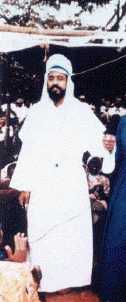 To all these practices the remaining question
is: how does the
individual survive the group, how would the ultimate social
definition be that would add something to christian culture that was
not there before? To make a
group-ego out of some spiritual leadership fighting the individual ego
is generally recognized as the problem of not only the guru-cults: they make nice schools of holy virtues, but
how does it save the individual to the actual society that it has to
adapt to? How does fighting the ego within a cult of even christian
reform actually protect the normal ego of mature selfresponsible
societal adaptation? It is clear how the ego of the guru or teacher
himself is adapted. It is not so clear whether the pupils will ever be
able to follow that example, or whether that would be the purpose of
the teaching in the first place. One can e.g. become a vaishnav guru
oneself in disciplic succession. But does maintaining to a school that
way make it possible to kiss it goodbye like one should with any other
teaching job on a school in order to become an equal to one's fellow
man? In Buddhism the practice is to have the youngster meditate with
the teachers in order to become disciplined and normally adapted
fathers and be indeed a school of spiritual discipline one is expected
to graduate from. In Christianity one uses the monastery as an
endstation of materialism to wait for heaven like one does in a home
for the old-aged. Both religious realities have a set function with
their societies defining liberation as a success of spiritually disciplined
service as a selfresponsible adult member. The common denominator for
this success is found in the word order and not so much in the concept
of the guru. A system of values
and grace only seems to be successful if the teachers and the teaching
turn out to be the catalyst in stead of the purpose. Thus the
contribution of their presence must be sought in the essence of their
teachings: in what way do these contribute to our own christian
liberation in service?
To all these practices the remaining question
is: how does the
individual survive the group, how would the ultimate social
definition be that would add something to christian culture that was
not there before? To make a
group-ego out of some spiritual leadership fighting the individual ego
is generally recognized as the problem of not only the guru-cults: they make nice schools of holy virtues, but
how does it save the individual to the actual society that it has to
adapt to? How does fighting the ego within a cult of even christian
reform actually protect the normal ego of mature selfresponsible
societal adaptation? It is clear how the ego of the guru or teacher
himself is adapted. It is not so clear whether the pupils will ever be
able to follow that example, or whether that would be the purpose of
the teaching in the first place. One can e.g. become a vaishnav guru
oneself in disciplic succession. But does maintaining to a school that
way make it possible to kiss it goodbye like one should with any other
teaching job on a school in order to become an equal to one's fellow
man? In Buddhism the practice is to have the youngster meditate with
the teachers in order to become disciplined and normally adapted
fathers and be indeed a school of spiritual discipline one is expected
to graduate from. In Christianity one uses the monastery as an
endstation of materialism to wait for heaven like one does in a home
for the old-aged. Both religious realities have a set function with
their societies defining liberation as a success of spiritually disciplined
service as a selfresponsible adult member. The common denominator for
this success is found in the word order and not so much in the concept
of the guru. A system of values
and grace only seems to be successful if the teachers and the teaching
turn out to be the catalyst in stead of the purpose. Thus the
contribution of their presence must be sought in the essence of their
teachings: in what way do these contribute to our own christian
liberation in service?
c) The nature and purpose
of discipleship and discipline itself.
As said
above to the essence of teaching one should look for the concept of
order that is added by the gurus.
Stated is their comprehensive view and intelligent grace with their
quartet reductions to the ten commandments. The danger is to get
attached to the school in stead of graduating to the selfresponsible
and disciplined mature state of selfrealization. Many a woman can tell
that many men suffer this problem in the same school of love figuring
herself as the goddess and church of matrimony. To become an equal is
the challenge of selfrealization. To become a God, goddess, guru or
school is not actually the purpose and might even be considered a
failure: the teacher has to teach until he (or she) realizes what
creates the dependency of the pupils and thus is himself just another
pupil of his (her) own school. The leader of psychoanalysis Dr.
Sigmund Freud stated clearly
that helping people was not the purpose of his school: it was for him a
scientific researchmethod to find out how to arrive at civilized
selfrealization in the true knowledge of the human predicament. Still
he had difficulty accepting the maturity of his own pupils that would
resist his authority: he created ego as he wanted, but he didn't know
how to escape from suffering it. For that the nature and purpose of discipleship
and discipline has to be understood.
The classical teachings
of the gurus state that the ego is a trap: it gives all the trouble of
desire and selfhood. With that they refer to the falsehood or material
identification with the (desires of the) body that would be the source
of fear and modern neurosis (the realization of being a
stimulus-response-junkie). The
ego properly aligned and disciplined in the service of the liberated
state they would support and work for. Bhagavan
Shree Rajneesh (Osho) stated
even that one would need a big ego in order to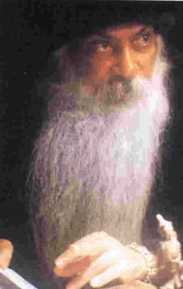 be able to drop it. But there is more about it: there is a whole cult of mystery
getting enlightened and reborn
to a new world and consciousness. It is not simply a school or piece of
knowledge one can chew on for one's health. It concerns a conversion, a
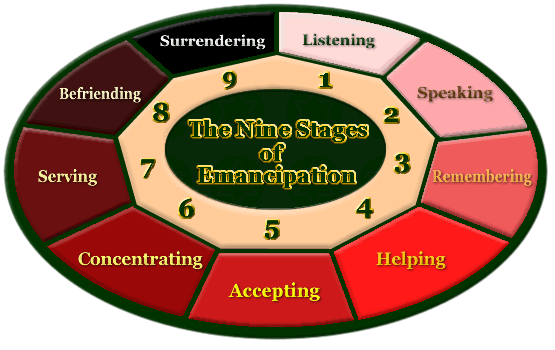
complete change of paradigm, outlook, lifestyle and consciousness. This
refers to a process of gradual evolution step by step (compare the
picture of emancipation of the guide of The Order of Time) towards total surrender to the authentic
service to the soul: the realization of ones true nature (swadharma).
This would also comprise the realization of past lives or the clearing up of ones
identifications and the acquisition of a divyam s'rotam or divine
hearing to the inner voice (the
'holy spirit'). This process must be carefully guarded as failing in it would lead to insanity: a
schizophrenia of a divided self estranged from the oneness of the holy
spirit in a hell of internal demoniac voices (by the devil possessed;
leading to whichcraft & heresy). This divine hearing or holy spirit as the
church calls it or de âtma-nivedanam or literally the: 'self-or
soul-communication' as the Hare Krishna's call it, can be called the
essence of the selfrealization process and the real purpose of discipleship and the discipline
itself.
be able to drop it. But there is more about it: there is a whole cult of mystery
getting enlightened and reborn
to a new world and consciousness. It is not simply a school or piece of
knowledge one can chew on for one's health. It concerns a conversion, a
complete change of paradigm, outlook, lifestyle and consciousness. This
refers to a process of gradual evolution step by step (compare the
picture of emancipation of the guide of The Order of Time) towards total surrender to the authentic
service to the soul: the realization of ones true nature (swadharma).
This would also comprise the realization of past lives or the clearing up of ones
identifications and the acquisition of a divyam s'rotam or divine
hearing to the inner voice (the
'holy spirit'). This process must be carefully guarded as failing in it would lead to insanity: a
schizophrenia of a divided self estranged from the oneness of the holy
spirit in a hell of internal demoniac voices (by the devil possessed;
leading to whichcraft & heresy). This divine hearing or holy spirit as the
church calls it or de âtma-nivedanam or literally the: 'self-or
soul-communication' as the Hare Krishna's call it, can be called the
essence of the selfrealization process and the real purpose of discipleship and the discipline
itself.
René Descartes the philosopher of reason and the method as
the founder of the scientific discipline would conclude with his cogito
ergo sum (I think therefore I am) to the same ultimate truth: the
true realization of the method and the discipline lies in the ability
to think. As simple as that. This thinking would be something
completely different from what we expected, the gurus have taught us: it is no small affair to
become a schizophrenic, wrestle with the bad spirit for the sake of a
holy one and turn out ultimately as a normally thinking person. Our Lord Jesus Christ did this wrestling
but was crucified before he could be caught drinking a beer in the pub
as an unobtrusive but liberated equal. Freaking out on this realization
of the holy spirit that would defy all false power over the world is
the catch of madness that led so many failures of selfrealization to
the asylum: ill disciplined with the ether can the breaking through of
the inner reality of the spirit and power of God not be controlled and
turns it into a hell which can effect like an induction psychosis as
happened with the Führer of Fascism (Adolf Hitler). One individual deranging can
induce the madness of a worldwar.
Guru Krishnamurti
therefore taught against führers and was in favor of realizing oneself as being the world. Pacifying that holistic self-world and
saving it would be equal to bringing peace and intelligence of
meditation to the world outside. The conflict perceived in the spirit
might not differ from the war going on outside in the material world.
What would the brain else be but a sense-organ? Likewise the guru Maharishi
Yogi 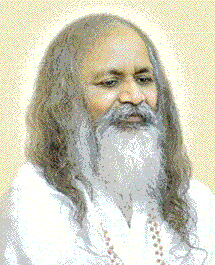 of transcendental meditation taught that a
group of successful meditators would effectively fight crime in the
environment and bring peace to the whole world just sitting still. Guru
Bhagavân Shree Rajneesh (Osho) spoke of a buddhafield that would wipe away
all suffering and unenlightenment miles around when he did his
energy-darshan.
of transcendental meditation taught that a
group of successful meditators would effectively fight crime in the
environment and bring peace to the whole world just sitting still. Guru
Bhagavân Shree Rajneesh (Osho) spoke of a buddhafield that would wipe away
all suffering and unenlightenment miles around when he did his
energy-darshan.
Gurus
at this point turn out to be the guardians of enlightenment: they have a calling to keep the madness out
of it and prevent a collective derangement following an ill-disciplined
selfrealizer or bogus-guru. Christian reformation suffered as known
likewise a lot of madness. All kinds of Christians killed one another
calling each other heretics to the true faith. Much of our wars are
explained by this failure of spiritual discipline. How does one really
stay out of repression and denial, projection and paranoia especially
in the enlightened state. The vaishnava's have a clearcut
answer to the problem of what they call the mâyâvâdi
or bogus-guru who says that the material world is an illusion: they say
that enlightenment is not the purpose at all of the spiritual
discipline, it is just a byproduct of liberation which is something
completely different. Enlightenment is simply the state of relief as a
result of giving up desires relaxing in the natural order of time. This
is the picture Christianity has of Hinduism and yoga: it is a selfish
thing making no sacrifice or service. But the Bhagavad Gîtâ
explains differently: the purpose is to attain to service, otherwise
the yoga would be nothing but cheating. It takes Lord Krishna the 800 verses of the
Gîtâ to explain
this to the confused warrior confronted with his enemy in order to give
him the fighting spirit. The essence of yoga is in the sacrifice otherwise one will get attached to the world
He explains in ch.3:9. This sacrifice must be according to one's nature, and the realization of one's nature is the purpose
of the discipline. This discipline can therefore be no easy job: it means that one has to answer to the
highest standards: the warrior fighting for righteousness could not
have any selfish motive, he would have to fight even in the interest of
the enemy himself. Nothing can be excluded as the supreme of God would
be in all and everything. Fascism was the first collective attempt at
conscious karma-yoga, working for the unity: bitter in the
beginning, but sweet in the end the Gîtâ clarifies. And
bitter it was indeed to present the Jews the bill of the biblical
jealousy with God and ourselves as westerners the bill of slavery and
colonialism. But the world survived its major war and nuclear
holocaust, licked its wounds and had to face the gurus as the deus
ex machina of modernity: thou shalt be disciple and disciplined
preferably before taking responsibility.
d) The nature of illusion
and attachment, and the final reality of liberation.
Not having a discipline
the gurus teach us, we are in a state of illusion: we do not see the
reality as it is. Mâyâ, the term used, is
etymologically recognized as not-this. Not-this is the definition of
illusion according to the Veda. Popularly this motive has been
expressed by modern psychotherapy as the here-and now realization of
sanity. This is where concepts of locality (loka, planet, place)
and time come in view. The western psychiatrist estimates the
sanity as a proper orientation in space and time. Scientific research
pointed out that there would be a distorted sense of time with the
mental patient, especially the schizophrenic. (just like e=m.c2
physicist Albert Einstein declaring that the perception of time depends on the
relative motion of the observer, see former article).
We saw that the essence of the success of the eternal values was simply
known as a spiritual discipline of order in service. Without it a loss
of control and a fall in illusion would be the reality. Anyone will
agree with the statement that it is difficult nay impossible to have
full control over the spirit. One must always try to direct ones mind,
but success is dependent on more than one may control. Just like in the
material world the spiritual world has its own laws. Identifications
work like living people. The analytical psychologist Carl
Jung spoke of archetypes that
would have their own existence in the collective unconscious. Occult
media speak of real people and spirits in the beyond and many religions
speak of ancestors or guardian angels that accompany the soul in its
material journey. The gurus may speak about the karma, workload or
consequence of actions, from past lives that is working out in the full
spirit and taking the lead over the motives of action. It is to them no simple
psychology of a straight lifetime of frustrations trauma's and guilt
about weakness. It is much more
the total reminiscence of ones existence in all time, past, present and
possibly even some preconception of a path drawn out into the future by
the leading spirits in the world. And this would apply to all lifeforms
one could have possibly lived or being identified with.
Whatever the reality
beyond might be, it is certainly a personal affair to appease the mind and to arrive at a spirit that is in
full touch with the material world. In fact hardly a single person is
capable of 24 hours of conscious control for longer than a couple of
days. Sleep deprivation can lead to serious selfintoxication if the
non-sleeper does not take enough rest. Resting usually the person loses
consciousness in order to have the brain freak out on all its repressed
neural pathways to restore a balance of brain-activity. Getting out of balance with
the functions of the brain is the normal routine of the human being: either the left brain is over stressed or
the right brain, or one is too cortical or too physical, too emotional
or too controlled. One may be overactive or overly receptive and
passive. Whatever
the disharmony in this organic brain might be, work is felt as a
fatigue that needs balancing.
The properly balanced
person would overcome the state of illusion, the Bhagavad
Gîtâ assures us. Not taken away by heat and cold, sorrow or
happiness the true devotee would keep balance (Bhagavad Gîtâ. II-15). Equilibrium is a central issue in the
spiritual endeavor against the misconceptions of the seer. Service this
way to the holy purpose would keep one free of attachments that lead to
the bewilderment of the illusioned state.  Bhagavân
S'rî Sathya Sai Baba
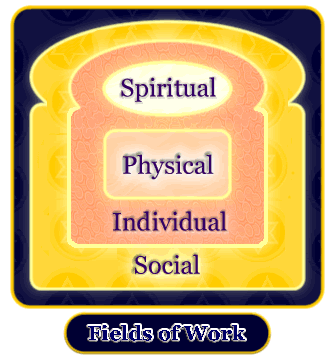
proposed for this a four times 6 discipline of dividing the activities
of the day over the common fields of work (see fields
of work of The Order of
Time). Sex and money are the motives of attachment while the eternal
values would settle for the interest of the balanced divine that would
maintain the intelligence.
Bhagavân
S'rî Sathya Sai Baba
proposed for this a four times 6 discipline of dividing the activities
of the day over the common fields of work (see fields
of work of The Order of
Time). Sex and money are the motives of attachment while the eternal
values would settle for the interest of the balanced divine that would
maintain the intelligence.
Attachment though is
not such a simple thing to understand. Attachment in fact is the term
used for all ignorance about cause and effect. If one doesn't
understand how the mind goes, one is ignorant. If one reasons from the
proper cause, one must be enlightened. This is the position held by the gurus: They
speak in one breath of mâyâ (illusion) avidyâ
(ignorance)and râga (attachment). This would constitute the psychology of the
sinner that would always suffer imbalance and lack of control. In
western terms the question would be: how to get out of the psychology
in the negative sense. The western answer is either religious: stop
sinning and everything will work out right or would be: go to the
psychologist and talk it over your here and now troubles and lack of
control. As the gurus would advise to bed early and rise early and set
for a proper scheme of service, meditation and socializing (as they all
have their ashrams ), so also the therapists tell their clients to have
contracts of agreement interacting with others and schedules of work
and rest and doing basic exercises not unlike those of yoga. The values
may differ but the therapy looks the same: living up to the eternal
values or not, one must follow a certain order of day and a calendar
for having holidays, days of rest and celebration of the freedom from
fruitive action.
In the political and
theological confusion about what the proper order of time would be, is the concept of labor of central importance [see also the Filognostic
Manifesto about work and
unemployment]. What kind of work would one have to do to keep out of
trouble and have an automatically pleasant, righteous and servile mind?
Some say right association gives right thinking, some say the opposite:
only facing the challenges of the ones in need (bad association) would
give the chance for service and liberation. Thus the gurus speak of
karma: it is not a simple concept of work but a highly personal
complication of the soul that permits no easy settlement by law or
commandment. None of the holy
scriptures speak of unemployment. They speak of different types of
work: karma, akarma and vikarma. Karma being material
labor, akarma not being unemployment, but (voluntary) labor for
the spirit and vikarma being unwanted labor like unrighteous
action or crime. Many modern gurus improvised on this vedic reality
giving a home to all kinds of volunteers that would support their
ashram. But checking those ashrams out one will rarely find an
employment office or even a welcome committee for the lost soul. The
first lesson in the ashram is to mind ones own spiritual business and
not worry too much about material labor. Some service might be welcome,
but you won't be paid for it or even receive food and shelter. They
make no nice monasteries were your hair is cut, your clothes are taken
and everything is taken care of by the order. In fact the concept of order
is completely revised by the gurus. They directed it to the nature of the individual in an
extend that no monastery ever could achieve. The master knows the
disciple and has a unique relationship. Not so much of a standard
routine like in a school or fixed cult. Only when the master has died
and things are taken care of by pupils something like an organized
order with clear instructions and set roles comes about (a religion, or
cult): the master doesn't amend any longer, the job is done. Still
with all of them there is an order of time that would offer a program
for the day. Again here the same conclusion can be drawn: each
authority complies with a settlement of time: it is the ultimate reality
and denominator of all gurus, religions, governments and laboring
societies. Thus the final
liberation at least has this mark of identity: the liberated person serves a
definite settlement of time making up and defining the actions within a
specific cultural framework. Illusion, in a relative
sense, is nothing but the result of parting from that framework and
attachment (as the root of misery) is nothing but the resistance from
unregulated desires working against one's own order.
e) The concept of
reincarnation of importance to the development of western concepts of
time.
In the western world
there has been a lot of controversy with the concept of time. Most
salient is the resistance against the concept of reincarnation amongst
the Christians [see also the aricle 'Reïncarnation
and the fear of time'].
According to St. Augustine the idea of reincarnation would be inadmissible as the Lord
would never be crucified again. The sinner would never have to pay
again for the sins once redeemed being thrown back in the material
world. One is liberated to be an eternally liberated soul [called nitya-mukta
by the vaishnav' gurus]. The gnostic christian alternative opposing
dares to speak about accounts of our redeemer as a propagator of a more
spiritual, vegetarian type of man with an uniquely personal point of
view as opposed to mechanical time-regulated ritual, worship and
onesided social routines of control. In fact this gnostic tradition is
the frustrated authentic spirituality of the christian world. Each
would and should realize his own unique nature of service to the more
immaterial and impersonal God of nature and time to which our Lord
would only be but an example to lead the way. Again the e.g. vaishnav
gurus speak like the church of more remote realities. One does not
reincarnate for the same world but for a higher one, like the christian
heaven, although they recognize the possibility of falling down from
higher planets to lower ones. More independent gurus speak less
opposing of the cycle of birth and death one has to escape from into
the impersonal void for the sake of the eternal soul: either one
dissolves in it or one has to wander around this material world life
after life until the karma is over. The Bhagavad Gîtâ in 4:7
speaks of avatâra's that descend from heaven to correct the
misdeeds and to protect the devotees. So in sum there is incarnation in
this material world but not really reincarnation in the sense of
returning to the same place. Once a job is done that is a permanent
acquisition of the soul. Another birth in the same situation would
be a birth of grace, a gift of God for the redemption, hope and belief
of another mission with others. This soul would be the continuity of
self-awareness that in grace is opposing the changing material nature
with its illusory power of false attraction.
The fact is that
Christianity with its motive of ascension defied, led by St. Augustine, the cyclic concept of time [see
also 'religious
time']: it was declared
invalid as mere repetition would be an offense to personal evolution:
the idea of fixed conditionings out which there is no real escape
['nitya-badda' also a vaishnav term] is unacceptable to the original
christian soul and the more common spiritual teaching. The story though
wasn't finished with this realization. The predilection for linear time ultimately
led to the perversion of the natural sense of cyclic time and its
conditionings: the newtonian
concept of time was replaced by the electromagnetic concept of linear
time without
another stable reference but the unit of measurement in a politically dictated concept of
standardtime. The
resentment against the idea of dead repetition obscured the reality of
cyclic time as the maintaining capacity of God and His Goodness. God can also be considered the repeated
affirmation by nature of good habits thus maintaining and feeding it
into evolution and refinement. The exact theme of evolution that
was wanted was fought with the defiance of cyclic time. Even the gurus turn out to be
in mâyâ themselves overly stressing the bad and destructive
nature of time pleading for other
worlds and remote heavens. In their speeches they speak about attaining
to the timeless happy void of nonmaterial reality etc. as if it could exist for
itself without the time-bound material world. All want to forget the God of time that is knocking on one's
door as The maintainer of the Goodness and harmony every day. With the
gurus concerning the time it all depends on the correct or incorrect
interpretation of the verses III-53-55 of the yoga-sûtras
of Patañjali. He says
there: It is so, that by controlling oneself with the succession of
the moments of time one reaches the spiritual insight of full
realization. (54) From this is one of understanding for that what stays
the same separate from another state of being, place, characteristic or
birth. But behind the word control must be read between brackets: [thus
with the help of a good schedule of meditation no longer being
disturbed in time], because only then will one understand that one
cannot cancel the soul with the time or the time with the soul. Also
the time is God explains Vyâsa in the Gîtâ
with Krishna identifying three times with the Time. Also
Patañjali returns to this later in the text in IV-33 when he
says: The order of things becomes crystal clear when one no longer
fights the uninterrupted flow of moments, when one no longer wages
against the time. So it is indeed about the order of time one
doesn't resist when one as a mediator accepts it as it is, for only
then will the witness, the soul, find stability.
It seems to be a universal repression of the true nature of God as a maintaining,
evolving, dynamic, changing and feeding force in nature that
automatically sifts out everything that does not last and thus is not true (according to the Gîtâ 2: 16). Resistance against the time of God might be
eternal, but so is the God of Time itself. Maybe we have hit with this
upon the basic psychology of mankind: we hate the God of time (father time) since 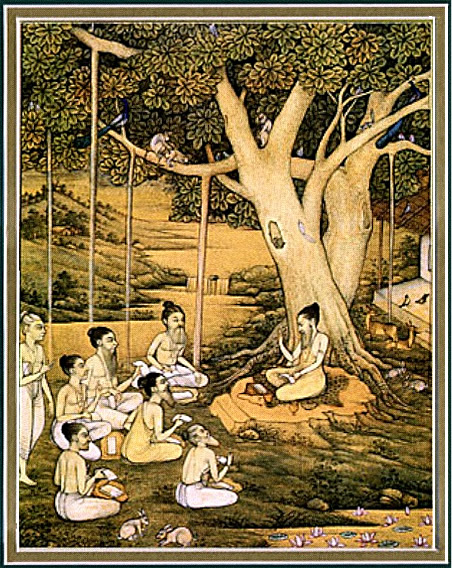 he always steals our lives and puts
everything to an end. He subdues all and appeases all in death and
destruction. This
realization turns everything around:
not man is eternal, but matter. We souls go in and out of the material
world that is as eternal as its absolutely relative time. Our human
forms are the temporal, the elements of matter are eternal. We just
can't stand to see our material games destroyed by time, and therefore
time (especially the cyclic reminding us of our failure) would be bad. This misconception brought
great havoc to mankind. Fighting
time itself we declared God dead as standardtime itself. Time is not
just linear and a static stiff scheme: time is the true (dynamic and
also cyclic) nature of the Lord. Great yogis , thus says the paramparâ-guru
(Vaishnav gurus in disciplic succession or âcârya's)
in the Bhâgavata Purâna meditate on the celestial sky spinning around like a wheel (cakra,
compare the cakra design of The Order of time. see time-quotes) because it is the visible part of The Supreme personality
of Godhead Himself: "All glory to Him who has taken the form of time
and brings peace to all the living worlds and who is the subduer of the
demigods, the Supreme Personality of God we meditate upon." (S B canto 5: 23-4). This is the scriptural truth. But the gurus rarely speak of
these verses. These verses compete with
their own temporal existence, just like it did with the ego of the holy
fathers of the christian church who denied the cyclic nature of time (remember that the earth was
supposed to stay flat too).
he always steals our lives and puts
everything to an end. He subdues all and appeases all in death and
destruction. This
realization turns everything around:
not man is eternal, but matter. We souls go in and out of the material
world that is as eternal as its absolutely relative time. Our human
forms are the temporal, the elements of matter are eternal. We just
can't stand to see our material games destroyed by time, and therefore
time (especially the cyclic reminding us of our failure) would be bad. This misconception brought
great havoc to mankind. Fighting
time itself we declared God dead as standardtime itself. Time is not
just linear and a static stiff scheme: time is the true (dynamic and
also cyclic) nature of the Lord. Great yogis , thus says the paramparâ-guru
(Vaishnav gurus in disciplic succession or âcârya's)
in the Bhâgavata Purâna meditate on the celestial sky spinning around like a wheel (cakra,
compare the cakra design of The Order of time. see time-quotes) because it is the visible part of The Supreme personality
of Godhead Himself: "All glory to Him who has taken the form of time
and brings peace to all the living worlds and who is the subduer of the
demigods, the Supreme Personality of God we meditate upon." (S B canto 5: 23-4). This is the scriptural truth. But the gurus rarely speak of
these verses. These verses compete with
their own temporal existence, just like it did with the ego of the holy
fathers of the christian church who denied the cyclic nature of time (remember that the earth was
supposed to stay flat too).
3)
The Analytic Conclusion.
In the twentiest
century it was the modern psychologist that pointed out the importance
of conditionings in the theory of human behavior next to which modern
physics also has put a relative to the linearity of time declaring it
dependent upon the frame of reference of the observer. Behavioral
therapy would be nothing else but a therapy of time: the conditionings
had to be compensated, outrated, outdone, desensitized, reconditioned,
etc. Our behavior wouldn't be a karmic fix but a temporary engagement
of possible error. Their statements were in fact in line with the gurus
declaring that karma yoga would undo many of the trauma's and
bad habits of material conditioning. But nor the behavioral scientist nor the
gurus would speak in favor of an alternative of time-management for the
whole world in general. Nobody
in fact consciously dares to take the role of the Lord of Time making
an imposition of it, as, according to Daniel in the Old Testament, that
would be an act of the beast, eventually suppress holiness and would
even be an impossible endeavor as, according a known french philosopher
(Henri Bergson), time in reality is a mere inscrutable duration. And
indeed along these lines took the pointless and unconscious actions of
the past century of political pragmatic and reductionist mankind place
in manipulating the concept of time. In the sixties we declared with
them not just the sexual revolution (after the french and russian one),
but also the chinese cultural one and the scientific paradigmatic one;
actions that were completely in defiance of what Dr. Sigmund Freud, the father of Psychoanalysis, had told us:
what ever you do, do it in free association, be a complement to the culture and not a monster of
repression and denial of not only your sexual nature. The real
revolution is of course the natural one of the cyclic time of the
revolving earth. 'Thou shall respect The Father', Freud would maintain
to himself fighting the repression. But did he suspect he was speaking for the real
Father Of Time. This analytical conclusion was lacking and present day (1990-ies) psychoanalysts
are still wrestling on how to relate to the object (of time and
repression) without clearly offering or understanding what alternatives of cultural
time actually mean. It means that the whole world, each person, each
individual and social group has its own settlement of time, its days of
celebration its own calendar and even scale, consciousness and
concepts, terms, language and genes of time. To respect this is the factual mission of the gurus and the
psychotherapists: we should not repress our own past nor the individual
cultures of the souls fixed in material orders of time devoted to God,
but find ways and means to have them all respected relative to the
one reality of the natural order (of God) that offers the true and real
of time (compare the clock-design of The Order of Time) that nobody in reality can deny or will
defy for long as Spinoza also says. To this, finally, should the
digital revolution of information be an exercise of respect and not
another drama of repression and denial to which no future can be seen,
if we really want to be of progress with the new medium.
Escaping from the
warning of the Holy Bible not to impose timeschemes, a world of mutual
time respect relative
to a common concept of natural
true and representative time, would exclude the dominance of any system
(and thus even please the anarchist/libertarian): only comprehensively
comparing each cultural fix to the dynamic reality of it in nature
(i.e. the position of the sun, moon and stars and spin of earth in an
astrarium representation) would give the proper sense of relativity,
consciousness and freedom of association, irrespective whatever
political /economic concept of dominating (american/german/french)
standardtime, swiss swatchbeats or Greenwich-worldtime. Each to his own time and the
time of God (read: nature) for all. And this comparing and eventual practical leaping to the order of God, would
do justice to the cause of the gurus: they, politically conscious,
never explicitly asked for it but they always preached for it.
Anand Aadhar Prabhu
(expanded
with Patañjali quotes and discussion: 22-08-2006)
LINKS: