|

 Definitions of filognostic terms Definitions of filognostic terms
"Through
the analytic study of how the different elements and principles of
spiritual knowledge cohere and are in conflict, how they originate and
how they are lost, the mind should be kept attentive until
[spiritually] satisfied." (S.B 11.20: 22)
(w)
=
only
found
in
the Game of Order Wiki
"Know it, cut
with it, get out of it"
See also
the filognostic
guide or the guide
checklist (quick reference picture by
picture) for a graphic presentation of the interrelations of basic
terms. Or go to the definitions page of the GameWiki
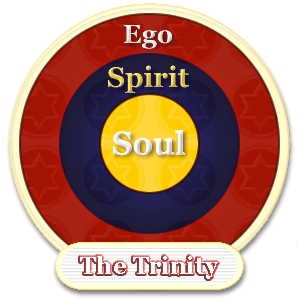
 Alignment. Literally it means to be put in one line with. The term is
used to describe the position of the ego according with the values of
the soul and the soul according with the reality of the Ideal (God).
Synonymous one could also say unifying without dissolving, connecting
without denying the difference and ranking without a double standard.
(best dutch translation: gelijkrichten) (pict.). Alignment. Literally it means to be put in one line with. The term is
used to describe the position of the ego according with the values of
the soul and the soul according with the reality of the Ideal (God).
Synonymous one could also say unifying without dissolving, connecting
without denying the difference and ranking without a double standard.
(best dutch translation: gelijkrichten) (pict.).
Apollonian values: (narrow:) lucidity, tranquility and rational,
intellectual detachment. Extended (spiritual/vedic): truth, eternity ,
bliss, beauty , goodness and consciousness. Also generally associated
with order and non-competitiveness. Philosophical: the term for
everything that in its worldview, philosophy of life and art has the
characteristics of the stable and balanced intellect, for everything
striving for order and harmony. Values associated with the greek god
Apollo. Counterpart: the dionysian values, the hedonistic lust for life
(see Wikipedia and an article).
Attachment: The
state
of
being
conditioned to an emotional preference also associated
with a legal and/or personal bond. Defies logic and reason. Considered
the source of lust feeding a loss of intelligence, anger, madness and
disease. Attachment is usually considered a weakness of the ego leading
to neurosis or ineffective behavior, whereas the same associated with
the soul is considered manageable love forgiven and graced as a form of
service to God.
Cakra-order, the order of the 'wheel' of the universe, is the order
defined by the order of the sun, viz. the gregorian calendar with its
dates divided in 12 solar months and twenty-four fortnights of fifteen
days at the one hand - two weeks plus a leap day - and the order of the
moon as defined by the signal days of the lunar phases at the other
hand. Part of this order is the Tempometer, the clock running to the sun. The cakra-order defines the
consciousness that is called natural. It opposes the consciousness that
is cultural, or defined by the counter-natural rhythms of the linear
week and the standard time clock that together in a materialist
philosophy of life on pragmatical, economic grounds defy the principle
of leaping as applied to the solar year and month. The cakra-order is
fundamental to the balancing of ones life in the fields of action and
the countering of the instability of one's cultural time awareness or
one's psychological
time. The cakra-calendar displays the week order as set to the sun, next to the
order of the moon.
Causality: According Aristotle (384-322 v. Chr.) in his Physics
are there four different types of causality: to the substance,
like in 'the bronze precedes the bronze statue', to the determining form
as in 'the form of a horse is essential to all horses and the cause of
it that we name them thus', to the doer like in 'the artist
constitutes the cause of his creation' and the causality of the norm
as in 'I stroll for my health and that is the cause of my strolling'.
In vedic logic we find all these four forms of causality back in the
form of the purusha as the soul, the essence of the
person of the creation, who in creation precedes the ego as the
substance thereof, in the avatâra, the god who
assumed the human form and thus liberated, in kâla
as the doer moving, creating and conditioning everything and in
dharma, the norm of the necessity of the justice of God
constituting the cause of the piety and the pious person of knowledge.
This way is also filognostically not so easily said that (normative)
just the religion or the dharma leads to the science of the
spiritual person, since the other way around the purusha or the
(original) person of knowledge himself again is also the cause of it
according the illusion of the (substantive) causality that we here
adhere to in a linear sense. So also is the avatâra there
time and again as a tree of knowledge from which (formative), like from
the index-page of the site, all philosophy, spirituality and religion with Him as the
stem and kernel sprouts, and is there also the impersonal of the
spirituality relating to the time factor kâla that, as
employed in the isolated articles at the site to this book, constitutes
the (constructive) cause of the intuitive way of learning. Thus is the
filognosy of different forms of consecution to one's emancipating and a one's
acquiring of experience (see
also logic and the internal fields; and round 16 about causality and logic).
Civil virtues: the regulation of the lust, the money, the
religosity and the liberation in service of the filognostic cause, in
relation to the being balanced with the order of time in the fields of
action.
- Lust: as a
young adult, but also later, you fight the being attached with
regulation in regard of the order of time; the desire, the lust, the
sexual attachment is gradually overcome by regulation. In the voluntary
acceptance of frustration of the lust, a mind of penance is needed as
said.
- Money: the desire
for money is settled by economy. The society taxes the moneymaker and
forces him to act responsibly with the means of exchange. Money and
responsibility, means and end, must be linked. Money is a burden, a
responsibility which, as also Jesus confirmed, can be a serious
hindrance on your way to heaven. So this is regulated. On the dole you
may not possess more than so much, with a private business you may not
evade taxes and with a salary you must be careful not to have a
mortgage to high. So material needs and desires are neatly taken care
of thus.
- Religiosity: also
the religion is there to link you up and remind you of the scriptural
truth that you tend to forget about in your material life. Stay
focussed is the message in the early stages of emancipation. Also
dedicating one's labor to the cause of transcendence is an important
directive.
- Liberation: the
profit-minded ego can oppose the spiritual mind, and therefore there is
the uniting in working for a good cause as a volunteer. At least part
of one's time should be reserved for it, just to keep the gate to
heaven open and stay motivated for the joy of life shared with all
creatures. But that liberation also involves the consciously countering
of the time-system of making money and having conflicts in political
opposition.
The civil virtues thus seen,
of the regulation of the lust, the money, the religion and the
liberation, only work progressively if the authentic order is
remembered. Religion offers the culture of remembrance, liberation
offers the original order of nature and our humanity as an a option of
choice that must be served if one also, or even entirely, wants to pull
one's weight in society in a selfless sense. Not doing so you will be a
victim of the modern neurosis with all its psychological symptoms of a
low self-esteem, uncontrolled emotions, anxieties and what not. In
general it is good to remember that the hindrances of culture (sex,
money, forgetting and ego), of nature (the modes, the climate,
calamities) and of your own lack of discipline (your disbelief, your
psychology) must be overcome.
The regulation of them in
relation to time and the fields of action: the regulation in time
of the civil virtues takes, in association with the regulative
principles, place in the B, P,C and S- fields of action.

Free Enterprise
• 1) B (of business
-
artha). The economy is settled in the business field
covering a quarter of your life: six hours of work for six days a week
practically making for a thirty-six hour workweek of which we have 48 a
year (see also dialogue three and four). The b-days extra indicated on
the lunar calendar are there to contrast the S- day of your club-life.
At these B-days you get together for discussing practical matters in
the business sphere or, being on your own, doing other practical
studies of some kind (see Full Calendar of Order).
The private interest
• 2) P (of private
-
dharma). The religiosity is next as an individual daily duty
there to warrant the quality of your personal life covered in the private
field in which one:
a - cares for oneself for six hours actively during
the day,
b - cares for one's own nature and body sleeping for
six hours each day and one
c - cares for doing one's personal meditations set
apart from the association of the club, the church, the mosque or
temple.
The religiosity consists of
the talent to retrieve your original nature and sense of duty. Nature
and natural time is the form of God you worship in the private sphere.
Most people meditate on the t.v. to have a heart for the stories of the
world and be committed to what's going on. Not much ego is involved,
one meditates on the universal form of the Lord so to speak in the form
of His diversity in the world, with in the back of one's mind the
silent hope that the sweet person of God will manifest His two-armed
normal form before you again in being a friend in the battle of life.
One is liberated, finds one's devotion, in the next discussed S-field
of one's favorite club, but one finds enlightenment in the private
sphere where one takes responsibility for oneself and distances oneself
from the world. This can only be done stability under the control of a
clock running to the sun. Without it will the karma timesystem sucked
in by the t.v. and political railroad-clock will seize you by a
soap-series e.g. or a movie watched too late. The t.v. is a means of
communication with many advantages, but can also, as said before, be
the cyclops, the monster, that locks you up in the house - like Ulysses
was in the cave - in false oneness , of estrangement, loneliness and
illusion. So you may live this private interest for six days a week
tops, but the seventh day you must respect the C-field of the social
cakra-days.
Married people must take
care of at least one quality time evening to spend with the family and
bachelors must at least once a week spend an evening with a friend,
relative or other intimate at home or, being without, at least close
the t.v. down for one day to find time for him/herself in an inner
association with the help of a good book e.g. These are the P-days on
the cakra calendar that never coincide with the C-days of going
downtown. The cakra-calendar is de calendar that shows the order of the
moon as projected on the solar calendar. Also at the fifteenth
cakra-day you must hearten this field but then without the materially
endeavoring of doing your job. This is an extra day of study and
fasting in the private sphere on which you with your schedules leap
back to the dynamics of the universe. Not doing so will your life's
tempo with 52 in stead of 48 weeks in a year be too high relative to
the lunar order.
Free association
• 3) C (of Cakra
- kâma). Following are the holidays not saved up to a
'thirteenth month' of four weeks to lie on a foreign beach at the end
of the year you worked. This department of the lust for a
natural, unregulated existence free from the cultural dictates is
settled at the seventh and fourteenth day of the cakra calendar. They are more or less set to the order we
had with the abolished ancient roman, julian calendar with its signal
days of a solar Ides, Kalends and Nones. The cakra days or holidays
spread through the year are there for the regulation of your lusts. You
walk the dog so to speak down town an let it sniff its way around
naturally. This builds and maintains your community sense and thus you
make friends at the social cakra days.
Spiritual Association
• 4) S (of spiritual
-
moksha). The liberation is finally settled by the lunar calendar
on the signal days of the astronomical lunar phases that contrast and
never coincide with the specific B-days thereof. At these spiritual
and/or sportive S-days in the club-field one studies the
fixations. In the form of books and songs, but also in the form of
concepts of association like your favorite game of sport, you respects
the rituals of the fixed routines you perform to exercise the respect
with; the respect needed to return to the concept of the ether as was
fixed by the rules of the game, the holy book or another fixation like
e.g. a fixed route for strolling. Thus you are liberated from all
materialistic concerns, since you at these days do not try to add to,
change or seek it elsewhere. But correcting errors you may always.
These are your factual sundays of not working for the money or another
result. You only care for getting together then to remember how it all
should be in dharma, the original duty to the nature of the soul, in
the in moksha being liberated from the karma, the load, the cross you
carry in the business field.
In short we say: business and
club life balances the virtue of the financial and liberation interests
to the moon; and the private and social life balances the being
virtuous with the religious and lusty interests to the sun. The cakra
fifteenth-days and the two-monthly leap days are there to fast and
study and your normal days of work must be balanced in being up for
others and yourself for twelve hours with equally resting and
meditating for the other half of the day. Not being this systematic,
and failing to be of respect for the regulative principles, you will be
devoured by the cyclops, the one-eyed monster of the commercial
t.v.-time of the karmic system that disqualifies you as a selfrealizer.
Do understand that this schedule is but a general directive; if you
want to avoid other participants in this must you plan everything a day
later e.g., but if you want to meet everyone of it and with it, as also
everyone on another frequency, then is this the way.
From the vedic reference they
are known as the purushârtas consisting of artha, dharma, kâma,
moksha.
See also: The fields of action
internally and externally; the cakra-order; html-page of the field table.
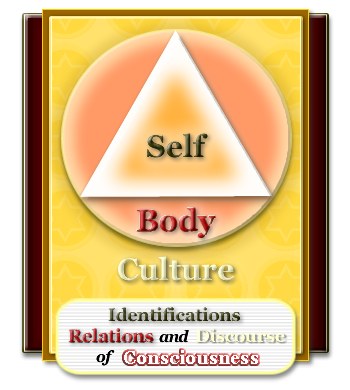
Consciousness: state of being; awareness of difference. One is at a certain
frequency, time-mode or paradigm aware with a way of differentiating
depending on the knowledge of the self (identifications), the body
(relations) and the culture (discourse, see picture). Filognostically one speaks of cultural and
natural consciousness: culturally a relative and unstable materialistic
form of consciousness which, based on material motives, manipulates the
time, and naturally a more absolute consciousness based on the respect
of the order of the sun, the moon and the stars, as seen in the sky
(see also: cakra-order).
One may also speak of ego
consciousness and soul consciousness. Ego consciousness is a form of
unconscious being which typifies a limited view
(darshana) based on a singular type of logic.
The
consciousness
of
the
soul is more filognostically of all the different forms of logic
together. Consciousness in the sense of a consciousness of the Absolute
Truth of the lawful natural order is characterized by equilibrium - the
balance between the basic views (guna-avatâras,
see also the modes) and the degrees of experience or commitment (adhikâri) - and is
traditionally mentioned in combination with the qualities of being
constant or eternal, and the being blissful. Consciousness, eternity
and bliss (vedically: sat-cit-ânanda) traditionally form
the three basic characteristics of the soul
(âtmâ). The consciousness of ego
consists of a limited form of logic
resorting under a single type of duality of religious versus scientific
thinking where one doesn't automatically find the happiness which is
stable and conscious of nature. Other views like the spiritual,
political, philosophical and analytical mind are then countered as
being more primitive, ethereal, materialistic, speculative, of or more sinful and such. The consciousness
of ego is more like the materialistic consciousness mentioned above
which we've also called cultural. It is a consciousness which -
modern/postmodern - is not stable and characterized by a psychological
sense of time or by the neurosis of a problem of consciousness. The
consciousness of the soul is more the
natural consciousness of a self in wisdom open to all the different
types of logic, causality, and intelligence
including the ego which then no longer is false (ahankâra)
or
materially
caught
in
the duality as one says. Put in a table look
the two forms of consciousness like this:
Conscious or
Unconscious?

On the basis of this table it
becomes evident dat the soul as the
conscious self of the regulative principles (vidhi) is found when there is equilibrium (the blue
fields) and integration (all the fields white and blue) in the three
basic values of the divine of the eternal, the blissful and the
conscious. When one of the soul, is one
considered top be conscious. is one of the ego (the white fields)
speaks one consequently of being repressive, unconscious, narrowed,
reductionistic or less conscious. The filognostic integration of the
separate views then constitutes the equilibrium, the conscious of the
complete of the soul that in all vision is present in a equal amount as
the silent witness in the here and now with the (in the blue fields)
described characteristics. So what it's all about in selfrealization -
or the in emancipation developing of one's consciousness - is to
find the correct fulfillment with each degree or with
each phase of of the evolution of one's experience with the matching
basic vision.
- The self
(psychoanalytically: the es) finds its fulfillment in the
impersonal of the natural truth and is then stable or eternal. To the
principle is the self spiritual but not stableand in the political is
the self either at its place or of awareness concerning the person.
- The ego cultivated as a form of science or a religion offers
an I-awareness which finds its fulfillment in the blissfulness of the principial fundamental to the reality of the soul. In
the scientific with its paradigmatic struggle and uncertainty finds the
ego in the impersonal not really the satisfaction of the equilibrium
and taken personally turns the ego into a religion not directly
according or peaceful with the other ego's in that context
(analytically it is then: superego).
- Wisdom is best at its place in the personal because it then
results in a consciousness which, as well recognisable in the transcendental as in the concrete of matter, has its place
and meaning. Together with the impersonal self that is eternal and the
blissful I-awareness that is principial is, is then the consciousness complete or filognostic (âtmatattva, of love for the
knowledge or of the reality of the soul).
Wisdom
taken
impersonally
runs
into an endless discussion of truths,
facts and opinions which, despite of its stability, is constantly
looking for its completeness and integrity. To the principle one may
with wisdom analyze many a thing, but then is also, despite the in meditation found satisfaction, the integration
questionable because the colliding of one analytic ego with the other
(the conflict of schools). In the analytical there is no automatic
respect for the integrity of the knowledge, or for the the person.
Concerning the integration of
the soul in the filognosy it is
also true that, bereft of the happiness and the stability, the wisdom
one has is all too personal; that bereft of consciousness and stability
the blissfulness is of a principial ego which doesn't reach beyond the
moral lesson; and that without the consciousness of the person and the
happiness of the principle the stability is impersonal and factually
empty, completely dry and materially senseless. Thus it becomes clear
with the views in combination with the qualities of the soul that one can only speak of a comprehensive
filognostic intelligence which
due to transcendence is free from an estrangement which is the
result of false ego or identification, when the integration of that
filognosy via the different levels is achieved by means of the uprooting of the hypocrisy of the illusion of the egotism of each of the twelve forms of being
conscious or unconscious.
See further also under materialism en field corruption.
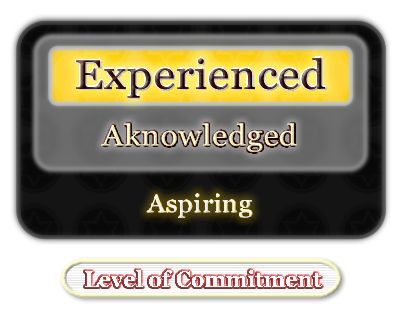
Degree of experience/commitment: According the three modes (gunas) of
nature, there are three degrees of experience and commitment. First of all has one with acquiring experience in one's
emancipating with the Game of Order
the self of the body, then has one an ego of identification and
responsibility therewith, and following is there the soul or the wisdom
of the intelligence and the experience. The self is of slowness and
ignorance with the material or the consciousness therewith, the ego is
there of being creative, is there of the knowledge and the
selfrealization of order with the movement in nature, and the soul
comes in view with maintaining oneself and the goodness being liberated
in the principles of humanity. Experience is known as a certain degree
of commitment: one is either a beginner, and advanced person or a
person acknowledged as being experienced and wise. Filognostically is
there in the positive-substantive reasoning to the person (purusha)
first
the
creativity
of
the ego (philosophy/science), then the
selfrealization in the enlightenment of meditation
(analysis/spirituality) and then the wisdom of respecting the person
with a certain comment (religion/politics). Normative-substantive
reasoning to the person is there in the Game of Order another logic of reasoning; then one goes
from person to ego to selfrealization (see causality and logic).
Disciplines: the disciplines are called the sadhanas in the vedic reference.
They
consist
of
the
three basic disciplines of dealing with:
•the facts - science and philosophy (vedic: brahman);
•the discipline of dealing with the principles - spirituality and
analysis (vedic: paramâtmâ);
•the discipline of dealing with the person - the personal (religious,
profane) and the political (vedic: bhagavân).
They constitute the basis for the sixfold of the six visions or
philosophies of filognosy .
The three disciplines are in the filognostic confession associated with
the three basic means of knowledge, the three basic elements of
creation: space (ether; the impersonal) matter (the local) and time
(personal in the sense of certain conditioning; prakrti, akasha and
kâla).
Vedic equivalent: trisâdhana; discussed in S.B. 1.2:11 (See also under teachers and emancipation).
Ego: The awareness of self, the concept of I. It is discriminated
from soul as being potentially without a conscience. It is often called
false when the I is identified with matter. The real of the ego is
found in the selfrealization of soul that matures towards
selfresponsibility no longer depending on a substituted authority. It
is the seat of anxiety as its propensity to identify with the material
condition is the guarantee of failure since nothing material will keep
its form forever. The notion of a superego refers to a social
construction of rules for behavioral conduct which has to define the
societal reality around an ideal I.
Filognostically one speaks of a
culturally neurotic ego when, because of a lack of difference in
cultural time, a false ego rises in which one in a cramp, in search of
an identity, identifies with matters of relative importance and that
way wants to make a difference to place and time, where such in a
natural sense - to age, vocation, functioning and experience - is not
needed: the identical of time or simultaneity as an identity crisis (an
identical time crisis; see also time-philosophical).
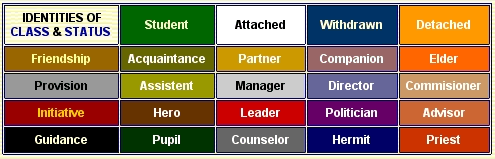
Election groups: political parties divided in sixteen which
1) are representative for the status-oriëntation of the civil
identity in society as divided according the four vocational groups (varna)
and
age
groups
(âs'rama), 2) align with a likewise
division of ministries, 3) form the basis for the divisions of seats in
parliament 4) are fixed in the constitution and in their organization
are heartened by the sitting government as being independent of the
freely organized coming and going members of parliament organized in
the more nepotistical oriented political parties.
Political parties logically take interest in
organizing and providing as much members of parliament for the
different election groups and thus be optimally of influence. This is
conducive to their programmatic integrity. Individual citizens, who
thus, also necessarily with respect for their level of abstraction and
experience, are reinforced in their identity of functioning, may
independently of the parties also choose for independent members of
parliament of their election group and/or have a political career by
gaining renown as defenders of the interest of their election group. A
civilian normally, considering age, changes his election group
minimally three times in his life, but is also allowed to stay with his
service delivered to a group standing for another category of age
and/or profession (e.g. in education which predominantly stands for the
interest of the development of the youngsters). The election groups
represent a calculated human rights identity -management policy which
precludes one-sided decision making, repression and the neglect of
certain societal groups. They warrant a, for the sake of civil
political trust, optimal tuning of the legislative and executive powers
of state (see further the program for a filognostically responsible political program (still in Dutch) and a graphical
representation of civil identities).
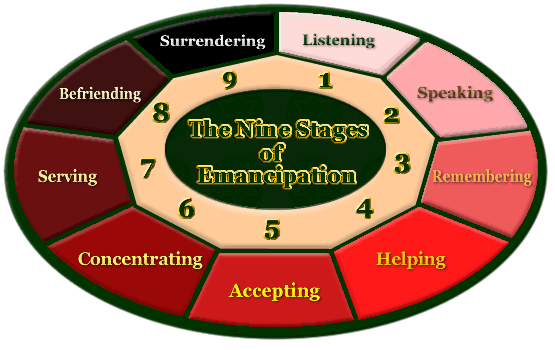
Emancipation: The process of the gradual elevation of or
liberation in service to the soul. It concerns the step by step
developing of the personality of a self-reliant mature individual. All
good education guides towards mature self-reliance and
self-realisation. Materially taken it means to become an equal to a
certain standard of civilization. Spiritually it refers to the process
of gradual liberation beginning with listening, speaking and
remembering ending in friendship and finally surrender to the dictates
of the soul (pict.).
Filognostically it entails the internalization of the authority of the
different teachers in the fields of science, spirituality and religion.
Emancipation is so the evolution of devotion in one's relating to
enlightenment. This consists of nine activities which are the result of
the combination of the three different forms of uniting one's
consciousness (in knowledge, in work and in voluntary service) and the
three disciplines (of the impersonal - the ether -, the local - the
material, and the personal - one's time-order).

Vedic is this process of
becoming called bhâgavata dharma and is it somewhat
differently described.
Stages of development in
devotion, the emancipatory actions needed thereto, and the vedic
equivalent to it:

Enlightenment: freedom from desire, surrender to the inner
voice of logic and reason, the sovereign, selfresponsible attitude with
wisdom in self-realization. See also the concept of liberation which refers to the service of or being of
service with this position and the concept of schizophrenia as the failure of enlightenment. The vedic
equivalent: kailavalya.
Equation of time: the dynamic difference between the clock
and the sundial, as determined by the tilt of the earth its axis and
the elliptical orbit of the earth around the sun. The equation is a
composite wave which from November till February delivers a deviation
with a maximum of half an hour relative to a clock that is not
corrected. The so-called Tempometer is the - astronomical - clock that counting with the
equation always says twelve when the sun passes through the south (see
also the page for the equation of time).
Ether: a chemical compound known as 1) dimethylether
CH3-O-CH3, 2) a term commonly used to describe the medium of the radio,
and 3) classically s the element of the spirit. Below the
considerations about the second and the third classical definition.
Historically: a classical
term
for
the
medium
of the spirit. According to the ancient Greeks was
it the substance from which light emanated. In greek mythology the god
Aether is the soul of the world. By vedic culture this is corroborated
in which the ether as the sky is also called akasha, the
element that represents the fifth basic one of creation after fire,
water, earth and air. The Supreme Personality of Godhead in vedic
theology may, according the Bhâgavata Purâna 11.5: 19 e.g., be considered the personification of the
ether and as an element may it be regarded the representation of the
supersoul, like with the Greeks. The Chinese, by name of the
neo-confucianists, call the ether qi and consider it the basis
for the generation of the creation and as that in which it also
dissolves. To the way of the human virtues must according to them the
troubling of the ether be cleared.
Modern physics in argument
about it: In modern time, Einstein built his theory on the denial
of the ether since it couldn't all that easy be proven by experiment.
Thus he postulated his theory of constants, the so-called theory of
relativity he himself preferred to name a 'theory of invariants'. A
theory indeed, for something that is difficult to measure, might still
exist. And so are variations in the speed of light found in an
experiment indicative of a fixed frame of reference like the ether.
Ever since Einstein introduced his theory, have there been doubts among
physicists whether the speed of light in empty space would be such an
absolute constant. The ancient philosopher Herakleitos said that in
principle everything is in flux (panta rhei) and the later
french philosopher René Descartes stated that empty space does
not exist, for according him all the cosmos is connected in force
fields. Thus, looking at the stars keeping their place in the galaxy,
it is difficult to deny the force field of the galaxy holding them
together and possibly influencing the speed of light. Also may, as was
proven by modern experiments, light travel faster, e.g. laser light
under special circumstances. And so is, being serious about the
evidence of the speed of light not always being constant, the stars
moving around in the galaxy and the insight of possible and plausible
new interpretations, of e.g. Maurizio Consoli, of the Michelson and
Morly experiment to measure the ether, the existence of a fixed
background by theory and observation confirmed. That fixed background
may indeed be described by the concept of the ether or the effect of
the electromagnetic force field of our galaxy. In other words leads
this theoretical position to the idea that the ether is our
life, that the conditioning to the ether, through the cyclic of
time connected with it, specifically is formative to our our spiritual
as wel as our material life. We therefrom speak of the ether when we
relate to that force field and experience our mind in that sphere as
the 'sound in the ether ', as the classical hindu-scripture the
Bhagavad Gîtâ confirms. The mind, thus seen, springs from
the ether in our being identified with the cyclic of the timing of our
material actions and finds at the other hand its peace again with the
meditative expansion of us souls detaching on the primordial ether of
space-time.
Even though Einstein on the basis of the absolute of
the speed of light and his special theory of relativity is presented as
being the source for the refutation of the existence of the ether as a
material element, must the case be considered differently. Einstein
later on in 1920 returned to the subject of the ether when he described
it with 'according to the general theory of relativity space is
endowed with physical qualities; in this sense, therefore,
there exists an ether.' His idea of the ether as being space
with characteristics of gravity, is relativistic as opposed to that of
H. Lorentz who departed more from an absolute concept of time with the
ether. Einstein's insight led to the notion of the existence of
different forms of ether which historically can be traced back to the
three forms of Vishnu, knowing Garbho- Kârano-and
Kshirodakas'âyi Vishnu (Satvata Tantra), which to
themselves constitute the three representations of the ether of
space-time, galactic space and the curved space of material objects as
planets and stars. The first, the ether of space-time, is expansive and
linear, the second, the galactic, is contracting, cyclic and creative,
and is known as the 'Creator', 'Something' or the Force' and the third
one, the planetary or local ether, is electromagnetically determined by
the characteristics of the object in space and is also known as the
radio-ether. The insight of Lorentz concerning the true time of cyclic
nature with the ether is of assistance in confirming the filognostic
thesis that says that when the time of the clock is equal to the true
time of nature, the instability of the experience of time or
psychological time then is terminated (see also the definition of Time). Thus served Einstein and Lorentz
filognostically not each others refutation, but served the two, both in
favor of the ether, rather the support of filognostically commensurate
arguments. What does perish in this debate though is the notion of the
constancy of light speed in a vacuum.
So must filognostically, viz.
loving the knowledge, be said: the ether as the effect of the force
field of the galaxy, which constitutes a fixed background which might
be influencing the speed of light, does exist on classical grounds as
well as on the ground of reason and logic, the observation of the order
of the stars spinning in the galaxy (the universal ether), the red
shift of the spectrum of galaxies (the primal ether), and the
gravitational lenses around stars (the local ether); an exitence
confirmed by the description of Einstein and the interpretations of the
experiments done. Thus constitutes the ether, in its relation to cyclic
time, a viable paradigm. This paradigm is defended at this site, as the
unifying idea of the combined cyclic of natural time, the expansion of
space-time and the stable self-awareness of having a soul of balance -
or witness of the time - therewith, which as a paradigm scientifically,
spiritually and personally correctly respected, as well offers room to
the classical philosophy and theology, as also to the analytical,
artistic and spiritual association, as also a to-the-point empirical
perceiving, theorizing and experimenting in a mechanistic sense. In
fact are the two seemingly contradictory departments of our cultures
united when we, with the assumption of a filognostical, or syncretic
form of spirituality free from speculations, are no longer denying the
existence of the ether.
Conclusion: The
concept of ether as known from the classics implies a new paradigm of
culture for the twenty-first century which states that, after the
geocentric paradigm of Ptolemy and the heliocentric way of thinking we
entertained ever since with Galileo Galilei, there is the order of life
and thought as derived from the galactocentric relating to the fixed
background of the forcefield of the planet and the star, the galaxy of
our universe, and all the galaxies of the cosmos that together
constitute the reality of the one, but divided ether, the Force
so to say. It is for this reason that the Hindus speak of the mountain
Meru on which the creator Brahmâ resides in the center of the
universe. Ever since we photographed this mountain of stars in the
middle of the galaxy heaping about the black hole in the center at
Sagittarius A, is the Bhâgavata Purâna 5.16: 7, speaking about it as stretching upwards as far as
downwards, not that allegorical anymore.
Implications:
Accepting the full reality of the ether, as it always was respected in
spiritual and religious exercises to the cyclic of time, must, wishing
such practically as a common notion of civil order and sober culture,
in the meditations on the cosmic expansion of space-time with it, the
ether be kept in mind as a stable time-base for e.g. a cakra-calendar.
One then has with, next to the respect for the order of the sun and the
moon, e.g. birthdays celebrated in respect of the precession of the
equinox, - the drift of the stars in the galaxy who are every year
about twenty minutes further up in the calendar-, or a special day set
to the galaxy center in remembering the day when we are closest to the
point of spin, so that one may speak of a galactic new year (at 2000, O
hr 6-7 July). The ether as a stable basis of time also leads to the
notion of 1) a tempometer as an improvement to the standard time
clocks, and 2) a deregulation of those legal settlements of time that
defy the natural order of cyclic time. Thus seen in the culture and
thus furthermore also reflected in the educational system, is the
concept of the ether of relevance to the personal and collective
integrity of the scientific, spiritual, religious and thus also
political interest of a truthful strategy of cultural maintenance and
order of relating to the forces of nature, we at this site have
baptized with the name filognosy: the straight love of knowledge in
cultural comprehension.
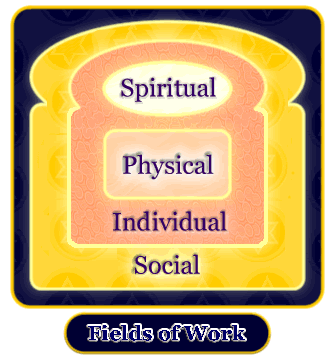
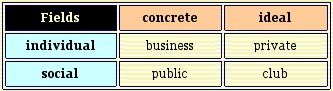
Fields: in summary there are basically four fields of
action: the social field of the false ego as settled by the cakra-order
of one's free association; the physical field of the material elements
as settled in one's individual enterprise or business; the individual
field of the private sphere as settled by the religion or religious
duty; and the spiritual field of one's clublife defining one's
liberation or social service. Religion covers the latter two fields and
one's concrete material interest is covered by the first two. The
fields are the result of comparing the quality of one's life with the
quantity. There are also inner fields of action referring to the
different dimensions of the functioning brain (see picture).
The external fields of action
relate to the civil virtues and the difference between the quantity and
the quality to the vaishnav dictum: 'man is qualitatively the same,
but quantitatively different from God'. The internal fields relate
to the difference in brain function constituting the duality of the
causal. The external fields result in a fourfold division with the
duality of as well 1) the qualities of being concrete or material at
the one hand and the being abstract, transcendental or metaphysical or
ideal at the other hand; and 2) the dual nature of the quantity of
being singular or individual at the one hand and the being numerous or
social at the other hand. The four options put in a matrix result in
four types of fields that are recognized as the individual of the
concrete and the ideal, and the social interest of the concrete and the
ideal. These four add up with the fields as mentioned by
Vyâsadeva in his verse (13: 5-7) in the Bhagavad Gîtâ concerning the fields:
the unmanifest (social ideal), the false ego (social concrete), the
material elements (the individual concrete) and the intelligence (the
individual ideal). These four fields also cover the four basic civil
virtues (vedic: the purushârthas) of settling the
association in a club or union (the ideal social), the lust (the social
concrete) the economy (the individual concrete), and the religiosity
(the individual ideal). The four fields managed in balance are part of
the cakra-order which assigns the days of the solar calendar to the
individual ideal and the social concrete fields while the days of the
moon are assigned to the individual concrete versus the social ideal
fields. Another important filognostic mark to the fields is the notion
that man not equipoised in the fields of action isolates himself in
fixations to one of the fields and thus arrives at his political
parties that in opposition in parliament never do agree to a righteous
division of seats for the representatives of the people so that the
so-called status-orientation election groups (varnâs'rama) and an according redistribution
of state departments is needed. The fields in egotistical political
opposition represent then the socialists (social ideal), the extreme or
nationalist right-wing (the social concrete), the rightwing liberal of
business interest (the individual concrete), and the religious, private
parties of the conservatives (the individual ideal). These different
parties in case of material corruption
decay into the four dictatorships of communism (social ideal),
militaristic fascism (concrete social), elitist capitalism (individual
concrete), and dictatorial and terrorist fundamentalism (individual
ideal). Coalitions of these forms of 'yielding to the dark side' result
in world wars. The remedy to preclude all this misery consists of the
filognostic dicipline of living the equilibrium to the fields of action
with the cakra-order which is only really possible with the
regulative principles (renunciation, yama) and the transcendence to the levels (the
eight
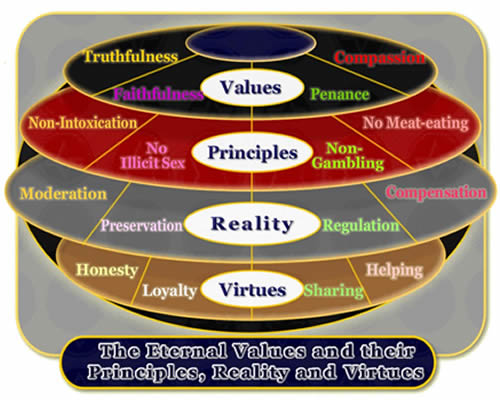
limbs, ashthânga) (see also the picture on the values and the levels of transcendence).
See also the page concerning the
fields, the
cakra-order, the
synopsis
(I-b) and the Full Calendar of Order
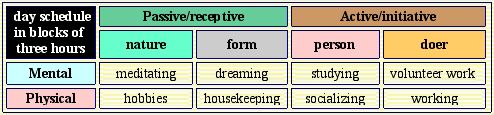
The internal fields consist
of the three dimensions of the brain function and relate to the
division of one's hours over the day. These dimensions concern the
dualities of the frontal/occipital regions of initiative or personality
and the receptivity or the perceptive regions (vedically the karmendriyas
and jñânendrîyas), The vertical interest of
the intellectual as opposed to the emotional centers (the jñâna-interest
opposing
the
bhakti interest of yoga) and the lateral spacial
interest as opposed to the time-interest (the interest of ether
-control or akasha, versus the conditioned order of time called
the cakra-order of kâla). Also in these fields
must the healthy individual keep his equilibrium in order not to
corrupt in personal perversions or psychopathology. With the receptive
region divided to the lateral arrives one at the interests of nature
(time-perception) versus the form (space-perecption) while the active
regions relate to the person (space-control) and the doer
(time-control). These four set against the vertical dimension of the
mental as opposed to the physical or emotional interest results in the
eight different main activities for a normal day of activities of an
individual: passive mental: meditating to nature and dreaming the form;
active mental: studying and voluntary labor; receptive physical:
hobbies to ones nature and housekeeping to ones form; active physical:
socializing to the person and laboring for others to the doer. The
imbalance between the different inner fields of a normal daily schedule
- which results in pscyhic trouble - necessitates the different days of
study, fasting and celebration that compensate for a lack of action
concerning especially the fields of voluntary or charitable labor,
studying and meditating, and the socializing outdoors. These days are
covered as well with the cakra-order of filognosy (see as well under civil virtues in relation to the fields of action and the time, and under
causlity).
See also the
page concerning the
fields, and the tempometer and lunar table for
timing ones days to the sun and moon.
Filognostics: people associated in their devotion of filognosy. There are,
according to the degree of experience or commitment, three types: the
beginner, the advanced and the acknowledged or 'pure' filognostic. Even
though the filognostics are usually found among the devotees of the
traditions, or under the believers, constitutes the filognostic the
respect for and of the integration of all the nine teachers.
After one year of associating with experienced filognostics under the
lead of a pure one, may one take initiation into the status of being
experienced by vowing: 'truthfully and faithfull I promise to share
and care'. One on that occasion also may receive confirmation of
one's 'nick', or spiritual name, representative for ones style of
associating as perceived in the filognostic commitment.
Vedic reference: Adhikâri; beginner: kanishthha, advanced: madhyama
and uttama, a pure devotee. See also: the filognostic prayer and the Filognostic Association.
Filognosy: love for the knowledge of self-realisation as inspired by as well the western as
eastern concepts of emancipation that
together make for the integrity of the different views, forms of logic
and
intelligence one finds in
modern society on a global scale.
Literally the term means:
love for knowledge. The term is used to contrast the term philosophy as
not just the love for wisdom or its development is
the goal but more the love for knowledge, the spiritual
knowledge of Christianity or gnosis if you like, as it is in its
entirety. Filognosy is an inclusive way of thinking trying not to
exclude anything. In the concrete world the term implies the practice
of inducing oneness and harmony of consciousness in the fields of facts
(method/science), principles (analysis/spirituality) and the person
(personal/politics) by means of contemplation, discourse and service to
the natural order of time in association with the ether, as the method
for countering the troubles of not knowing (see also the instruction
site Filognosy).
History: filognosy,
initiated by Aadhar (René P. B. A. Meijer) started as a
meditation exercise in a New Age center in the late nineties in
Enschede, the Netherlands. Later on it developed the status of a lead
of scientific, spiritual and religious reform in general, based on the
vedic knowledge handed down from the indian philosopher and sage
Vyãsadeva, who lived about five thousand years ago. Aadhar
translated the S'rîmad Bhãgavatam faithful, in following the example of his
precursor in Holland S'rî Hayes'var das (H. v. Teylingen - 1938-1998), and presented
it on the internet. Filognosy as such is his summary and comment to the
vedic knowledge involved in reforming his life to the values of yoga
philosophy in a narrow sense and the whole field of western scientific
thinking, spirituality and the by the person determined politics in a
broader sense.
Classical reference:
the classical reference for the division is formed by the six darshanas
or visions fundamental to the philosophy of India that constitutes the
basis for the structure of the knowledge of the Bhâgavata
Purâna of
Vyâsadeva. To the filognostic version of the sixfold of the
philosophical method, paradigmatic science, artistic analysis, the
transcending spirituality, the religiously connoted personal and the
political of comments and compromising adaptations, is it so, as it is
with the original darshanas, that the visions have in common:
- 1) The concept of a
conscious and continuing self or soul.
- 2) The concept of the
cross or workload an individual, family or nation carries.
- 3) The perspective for a
solution of being liberated in service.
- 4) The acknowledgment of
the authority of an established culture of literary reference.
In western philosophy we find
with D. Hume in his Treatise on Human nature (I.III-1 - About
knowledge) a division in seven terms with which more or less the
filognosy can be described as the identity of the similarity
in philosophical considerations concerning the natural order of the relations
of
time
and
place, to which the relations of quantity,
numbers, the beauty and the art of analysis, combined with the
quality of the level of transcendence and connectedness in
austerity, lead to the arguments of cause and effect in
religion and biography of the science of the person, in such a way that
in the end the opposition of the politics of societally assuming
responsibilities is attained. With the political opposites is the
filognostic, contrary to the materialist who identifies himself onesided, then united in his consciousness of the dualities. He oversees the structure,
he sees the coherence. Ultimately is the filognostic a yoga-practicioner following the dictum: 'unity in
diversity'.
Political relevance:
The filognostical found opposition between political parties and election-groups so constitutes the social and personal
reflection of the quest for the integrity of :
- 1) The balance
between the fortune and the six basic divisions which as well define
the materialism with the conflict of the ego of material compensations
and obscurity belonging to it.
- 2) The virtue of
the quality versus the quantity in the internal and external fields of
action.
- 3) The representation
of the personal versus the impersonal relating to the source of
knowledge in the form of teachers.
- 4) The identity
and age of status-orientation groups and degrees of experience with
which the game of societal order is played by each and everyone.
In short is filognosy
politically concerned with finding the equilibrium of the virtue of
the representation of the identity.
Etymology: the word
filognosy is derived from the greek word filo - love and gnosis -
knowledge. Thus the meaning in the sense of love of knowledge.
Vedic Equivalent: the
spiritual knowledge of filognosy is closest to the vedic term âtmatattva;
which
literally
means,
the
principle or reality of the soul, which is
also described as spiritual knowledge in general.
Philosofical classification:
philosofically
may
filognosy
be
described as naturalistic idealism.
Logo: symolically presented,
looks, after the prayer of filognosy, the integrity of the filognostic commitment
like this:

See further:
- Filognosy or the Orde of Time
- How to have a life? A good introduction to the field of filognosy is
formed by
the introductions and the synopsis of the different sections of the
site The Order of Time.
- Filognosy - basic instruction site
offering definitions, so-called rounds, filognostic art, a list of
basic terms and more.
- The filognostic Confession - the basics of the
filognostic tenet summed up in 170 articles.
- A Small Philosophy of
Association -
filognosy clear about the political implications.
- The hypocrisy if one is not integer with the civil virtues, the
fields
and the principles.
- The GameWiki page on filognosy.
Galactic year: a year described by one revolution of the
earth around the sun in relation to the center of the galaxy (localized
at Sagittarius A). This year is actually a galactic day for it takes
about 226 million years before our solar system has made a real year in
describing one full circle around the galaxy center. The galactic year
is of importance in relation to the respect for the ether and the long
term cultural and personal continence with it because it steps up with
one day in about 71 years forward through the calendar (see
galactic time pages).
God: most often God is understood to be a person of a transcendental nature, also called the
Lord. Since several Lordships stressed the importance of not being God
themselves but just being the prophet, son or teacher of God, the term impersonally refers to a
mystical omnipresent all-knowing and worshipable Supreme Being or
Supersoul. Scientifically the term seems to refer to the power (or the soul) of the (omnipresent, all-knowing and
respectable) conditioning cyclic of time
in relation to the ether, or the
'Force', determining the material structure and consciousness of any living being. It is clear that God
can be anything or anyone while the reverse is not true, being just an
element and not the category. Thus God is a person, while at the same
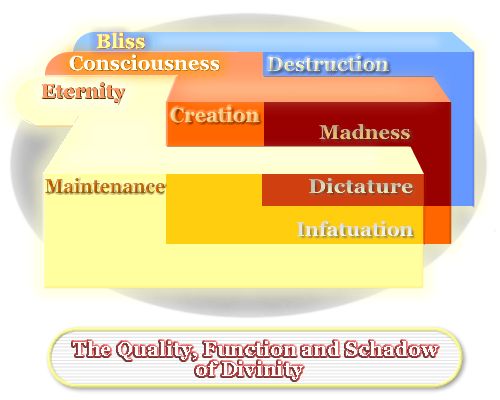
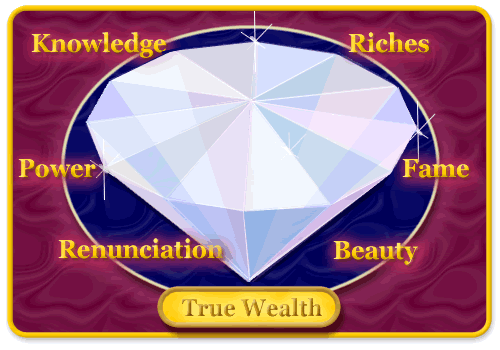
time the person is not God (also see pict. of types of divinity and pict. of the opulence or wealth of God).
• There are three
characteristics of divinity: maintenance, creation and destruction (see
modes).
• There are three qualities: eternity (from the constant witness that
is the soul, consciousness (of the natural order of the sun, the moon and the stars, and bliss (the result of
doing yout duty, of dharma).
• There are three schadows: infatuation from attachment, dictatorship
from false authority, and madness from a lack of discipline..
God can filognostically, to
the degrees of experience, also be described as the Self of the
selves, the Ego of the egos and the Soul of the souls. God as the
Force or as 'something' is in a multicausal sense understood to be the impersonation of the ether, or the other way around the ether as the reflection of the integrity of the
person of God (see also modes).
* Vedically one knows God
according to the Upanishad (the philosophical nucleus) as the Complete
Whole, called OM PURNAM. Unknowable, but still an unmistakable fact.
Hypocrisy:
Hypocrisy or equilibrium?

Hypocrite is
one when one is keeping up appearances, when one acts as-if while one
in fact doesn't know or didn't succeed in figuring out how to combine
an outward correctness with the inner harmony and balance of an
essential virtue. Thus it
becomes evident that the counterpart of hypocrisy is formed by the
virtue of an inner equilibrium; or that one the correct way is virtuous
with one's external behavior in the different spheres of life or fields of action.
Equilibrium is there
with the 'heavenly virtues' (see the Confucianism of Zhi Xi) when one
properly matches the virtue and the field (source:
Hinduism - khetra) in accord with the order of time (see filognosy and Islam); in other words, when the ether is no more clouded. In matters of business
is one then dutiful with the money, in private is one then of insight
in the religious sense, concerning the ego is one then humane and
trustful and in one's clublife dominates then the certainty and
propriety of a ritualized respect.
Hypocrisy on the
contrary is when one clouds the ether by not respecting the regulative principles (see also values), so that an ego is formed characterized by false
appearances. In terms of business matters serves the falsity of
dutifulness then the masking of deceit, exploit and price-fixing.
Private serves the falsity of the understanding then the masking of
calculation, attachment and infatuation. Concerning matters of the ego
serves the falsity of acting humanly then the masking of the hysteria,
inequality and a personality cult. In the field of one's clublife
serves the appearance of a formal correctitude the masking of a sexual obsession, institutional power and favoritism. Each of
the thwelve forms of hypocrisy implicates a policy of deception in
which one is virtuousin the wrong context or in which one with one
single field interest tries to cover all virtue. Thus is then in the field of business
activities the striving for religious virtue simply deceptive, the
regulation of lust exploitation, and the striving for liberation (from competition) a falsy fixed price. Thus
is the ambition to make money in the private sphere calculation, the
regulation of lust in private attachment and is striving for liberation in the private sphere
infatuation. To get the ego healthy on the
basis of money is drawing attention or unsollicited advertising, based
on religiosity is doing the ego a form of
inequality and is the endeavor to find liberation in it a personality cult. In the field of associating with
others when one in a club strives for the regulation of lust is a sexual obsession, the religious constitutes so a heartless
institutionalized power, and the striving for money is then a form of
favoritism. One could also state that hypocrisy is the result of
ulterior motives.
see also: values, principles, principles, fields, filognosy, materialism.
Identity: Being identical to oneself, to the same continuing life, the
sameness of essential character. It usually refers to the image people
have of oneself and the accordance of that image with the way one sees
or wants to see oneself. Familiar with oneself, there are positive
identifications. The opposite is defined as estrangement. Formal
identification is called problematic as the real (unique) person seems
to disappear in the uniform of a group. Materially the term refers to
being properly oriented in one's selfimage to the here and now in the
space-time of one's body. Being disturbed in this belongs to the
definition of mental illness: one is depersonalized or disoriented not
aware of one's responsibility for the place and timing of one's own
body. Filognostically mankind is known to suffer an identitycrisis
being - politically - split up (divided) in the awareness of place and
time: the international pragmatical timesystem threatens to devour the
person and his culturally authentic identity in his feeling of natural
timing to his own place (the soul of that being denounced as a bad or
nationalistic ego). Therefore one is filognostically considered
self-aware having realized a formal (material) identity without losing
oneself in the uniform or other behavior of a group. The formal of the
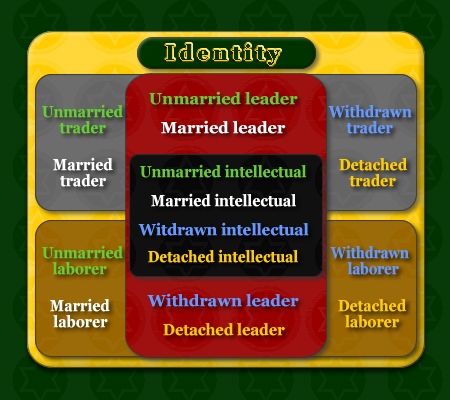
sixteenfold identity of the status-orientation is settled to the four
vocational interests (of being a friend, a provider, an initiator, or a
person of guidance) and the four agegroups constituting the status
(youth, young-adult, middle-aged and old-aged; see also color
code, the pict.
and the The Game of Order).
The falsehood of the civil
status-orientation of identity is checked in the eight levels of
abstraction that offer the transcendence or the metaphysical and thus
facilitate the freedom of choice and relativizing that one needs not to
end up in a class-struggle or a caste-system. This transcendence is
accompanied by a certain understanding for the necessity of the different operators, or functions, of the identity at each
level and to each degree of commitment or mode of experience
(self-ego-soul), to which is found a refinement in 24
identity-functions. Identification devoid of the motives of the soul is
considered the cause of attachment (which leads to a loss of
intelligence). Vedic: varnâs'rama-dharma (see further the
wiki-page on identity).
Illusion: something false taken to be true. Usually applied
to the difference between being materially identified and spiritually
directed. The impermanent or material is considered illusive as it is
doomed to change while the management of the form, the spirit resulting
from alignment with the soul, and the soul itself is considered eternal
as it refers to the invariance of self-awareness and the reality of
change, time itself. Vedically seen is illusion the
'not-this'-awareness (mâyâ).
Illusion or truth?
Thus one thas to the concrete of nature the three basic elements of which we are certain and are there also
the three
disciplines of the respect
for the integrity of the completere thereof. Set against eachother one
thus has a scheme showing nine realms of knowledge of which we either
speak of illusion or truth, depending on the quality of the equilibrium
one has to the civil virtues of
the alignment with the soul:

With the time order we factually respect the time.
With the law are we principled with the time.
With the religion we are personal with the time.
With the power we are factually in favor of the space we occupy.
With the intelligence we are principled with the space.
With the ego we are personal with the space.
In our labor we are factually concerned with our matter.
In politics we are principled with the interest of our matter.
With the capital we are personal with our being materially groomed.
In these realms of knowledge
we speak of either illusion or of truth; in other words, the time order
can be false (standard time) or be true (natural time); the law may be false (legal settlement of time) or be
true (to the human values and the
commandments); the religion may be false (to the linear week order) or
be true (directed to the sun and moon); the power may be false (going
against its nature) or be true (with respecting nature); the
intelligence may be false (paradigmatically divided) or be true
(syncretically aligned in filognosy); the ego may be false (in identification with the
material interest) or be true (as the I of the soul); labor may be
false (with an ulterior motive) or be true (voluntary without an
ulterior motive); poltics may be false (to the interest of the party)
or be true (to the interest of the election group and the order of the election groups); and capital may be false (serving selfhood) or be true
(in service of righteousness).
Vedically seen is it the
'not-this'-consciousness. The mantra to curb it: neti, neti or: nor this, nor that.
Illusion in filognosy.
Filognostically we speak also of illusion with the supposition that a
single form of logic would be the only form of logic in association
with the three basic disciplines of one of the four operative causes of
the person, the form, the norm and the doer: the logic then may be true
and valid, but is nevertheless a perfect causal illusion
because one is not aware of the fact that just as well, with another
order of reasoning, another just as valid type of logic may be found.
In materialism this type of illusion is common practice.
Intelligence: in short the sum of experience.
Psychometrically it
is the level of accomplishment relative to that of others with the same
age. Spiritually it is the ability to align with the interest and
values of the soul. From this the definition of stupidity is derived:
it is stupid to defy the ideal. (see also fields)
With the intelligence as a
form of, a kind of, discrimination, we speak in filognosy of three main types of intelligence:
a) the internal
intelligence of the fields of action associated with the different parts of the
brain,
b) the external intelligence associated with the fields of action in the outside world and
c) the integrative or filognostic intelligence relating
to the different forms of logic and causality.
And thus we have internally:
1 - an
intellectual, abstract-intelligence of the gray cells, the cortex,
2 - an emotional-motoric intelligence of the lower centers,
3 - a perceptional intelligence of the back-brain,
4 - an intelligence of the personality and the initiative
which is frontal and
5 - a spacial intelligence, or the spacial ability, which is of
the right hemisphere and rather "macsculine" and parallel, and
6 - a language-capable intelligence wich is of the left
hemisphere and rather serial and "feminine".
Externally we then
have:
1- a material,
practical intelligence of math and dexterity in endeavoring,
2 - a moral or religious intelligence of liberation in individual self-responsibility,
3 - a spiritual intelligence which is of enlightenment associating in unificiation and
4 - a socially concrete intelligence which is more of the ego living to its lusty nature to have a good time.
To the integration of
the
intelligence
we
then
also have, epistemologically:
A) the six forms
of filognostic intelligence associated with the six views of the logic
to the disciplines and the causality, together with
B) a seventh, viz. the constructive intelligence, which is
evolutionary or emancipatory and stands for an simultaneous evolution
of all the views of the intelligence. (see logic)
C) Further are there epistemologically also the, from a material
perspective, non-valid forms of intelligence which represent the
five forms of meditative intelligence: the three visions which are
the positive-formative, enlightened-normative and liberated-substantive
ones that each for themselves confirm their own disciplinary reality
with a separate type of intelligence, together with the into the two
forms of constructive, evolutionairy logic decayed intelligencies of:
1) an intelligence directed at the past, or a retrospective
intelligence, and 2) one standing for the meditation on the future,
viz. a so-called prospective intelligence.
With all these forms of
intelligence evolved in a balanced manner one may be very intelligent
in a filognostic way, but still be af an avergage score with an
achievement directed intelligence-test.
Level: levels there are eight. They represent the level of
abstraction typical for an individual or an individual identity. These levels lead to identity operators defining the different degrees of experience or modes a player of the Game of Order has (see further transcendence)
Liberation: redemption, the goal of spiritual exercises. Often
associated with the concept of enlightenment. Opposing to enlightenment
as being the (sometimes sudden) result of detachment (think of "a sigh
of relief" when something drops away), has liberation a broader meaning
in the sense of also arriving at a concept of servitude to that which
brought the enlightenment. While enlightenment falling short of
formulating what should replace the burden that fell away carries the
danger of psychic derailing, is liberation seen as a higher purpose
because of its including the idea of service to the ideal, God, the
soul, the Order or the community. The concept of liberation especially
pertains to realizing a relationship of servitude in the spiritual
field. At the material level one speaks of attachment if the action is
not subservient to the spiritual goal (e.g. watching t.v. out of 'love
for the fellow men' can be a liberation, on the condition that one is,
to a spiritual authority, able for a day to say no also to keeping
distance that way).
Logic: in filognosy we speak, according its the six points of
view, about seven forms of logic set apart by their operativre cause -
viz. the four forms of causality - and the discipline one departs from. Since each of the
three basic
disciplines represents a
certain causality, is one thus logically spoken in different ways
reasoning from the one disciplne towards the other. The disciplines on the basis of which one reasons we call,
to indicate the f0rm of logic:
1) from the facts, positive,
2) from the principles enlightened and
3) as reasoned from the person liberated.
As for the causality is the
logic named:
1) formative in reasoning towards the facts
2) normative in reasoning towards the
principles
3) and substantive as reasoned to the person,
4) constructive in the equally reasoning to
all three at the same time, that is to say in the gradually building up
evolutionary wise or emancipatory.
De three basic
disciplines
concerning the a)
facts, b) the principles and c) the
person, as well serving as the point of departure as the targeted end,
then deliver a permutation of the abc-sequence which thus defines each
of the six filognostic views as a certain type of logic:
• abc: the
positive-substantive logic typical for politics.
• bac: the enlightened-substantive logic typical for religion.
• acb: the positive-normative logic typical for analysis.
• cab: the liberated-normative logic typical for spirituality.
• bca: the enlightened-formative logic typical for philosophy.
• cba: the liberated-formative logic typical for science.
The seventh type of logic to
the constructive cause departing from the three basic disciplines is a self-referring type of logic which in
fact terminates itself: it is the logic of the meditative mind finding
its peace in the realization of the reality of the here and now. Other
forms of logic such as the selfreferring liberated-substantive,
the enlightened-normative and the positive-f0rmative
type of logic are likewise self-referring circular forms of reasoning
which simply to the logic constitute the self-confirming of a vision
and which filognostically are seen as forms of logic that actually are
of no validity because of the selfreference. These also we then see as
forms of meditative minding suitable for the self-correction of a
vision.
Matter: The object of sentience that by definition of perception
must change (its place & form). Matter we know in three: solid,
liquid and gaseous. Light is the thinnest form of matter van matter.
Light particles may, quantum-mechanically, also be waves. They are in
fact packages of energy behaving according the way one treats them.
That is what quantum-mechanics means in physics.
How matter originated and
to what it belongs:
- Basic elements:
matter
constitutes
a
basic
element of nature; in reality we have three
of them: the time, the space
wich as a force field is also called the ether, and matter. These elements cannot be reduced to
any other element, and are therefore called basic elements; a kind of
holy trinity fundamental to the entire creation of spirit life and form (see pic).
- A condensation of
energy: matter is seen as a condensate of energy in many different
forms or atoms: the primal ether or primal potency of the force field
of timespace concentrated itself in the beginning of the creation
electromagnetically, solidified so to say into clusters of galaxies and
planets around stars, because the primal energy of the big bang, as a
reaction to the initial expansion, was subdued to the conditions of
cyclic time. Thus after an initial expansion - the big bang - rose a
countering power, the attraction, which next condensated the universe
and conditioned it in patterns of spin into life forms.
- Opposing forces:
matter owes its existence thus to the fact of the opposing forces of
nature of attraction and expansion wich together make up the
equilibrium of a relatively stable universe. Matter is a manifestation
of the principle of attraction in the universe which is founded upon
the cyclic of time. For that reason is matter always in flux, the way
the greek philosopher Herakleitos said it: panta rhei,
everything is on the move. Relating to matter one also speaks of
gravity: great quantities of matter like the planet earth form a kind
of magnet which keeps together all the energy and attracts objects in
outer space like the moon.
- matter as a one-sided
opinion:we speak of materialism when culturally is not sufficiently taken notice of or
counted with the two other basic elements of nature, knowing the
factors of 1) life (the threefold of natural tijd)
and
2)
spirit (which is the result of the difference
created under the influence of the ether),
and
one
thereto
on
top thirdly pushes off against, or is in denial
with, the integrity of the three basic elements: de person in a narrow sense or God
in a broader sense (see further under materialism).
Vedic reference:
matter is called prakriti, the primal ether of the
undifferentiated energy is called pradhâna, the ether is
called akasha and kâla is the time which
threefold is also called trikâlika, and the person of God, the integrity of the so-called complete
whole (om purnam) is the purusha. All these terms are
fundametal concepts in vedic philosophy.
See also: the modes of nature as the natural basis of our existence. The
definition of
filognosy as an expansion to,
or variation, or form of logic with the
threefold of the universe.
Materialism: is the philosophy reducing everything to
material,
quantifiable entities. Materialism is characterized by a certain
morality which simply amounts to the preference for animal values of
the 'I' and 'mine' of the primary eating, mating, sleeping and
fighting, in which fighting stands for the competitively being obsessed
with sex, money and power as the goals in life one dreams of as the
bringers of happiness and freedom. This type of thinking opposes
idealism which seeks its happiness more in servicing the spiritual
ideals of knowledge, togetherness, and consciousness, enlightenment,
evolution emancipation, implying a metaphysical, spiritual or dreamt
reality next to the existing imperfect material world of matter, on the
basis of the more classical, philosophical and theological, divine
values and purposes of man as the highlight of evolution. Those values
can filognostical be described as the human ones of the duties to
share, care, be truthful and faithful as the preconditions for a
satisfying human society. In filognosy are both the views of idealism
and materialism the inevitable flip-sides of concept of a multiple
causality which, with a lack of discipline in the management of time
and the association, not only materially (to the form) and ideally (to
the norm or the nature) may be found in opposition, but also personally
(substantive) and impersonally (to the doer) opposing political being
conflictive can go awry. The basis for the filognostic integration of
the the causal mind id with the Greek found with Aristotle and with the
Indians with Vyâsadeva. Multiple causality is also known to have
a disease-model: a criminal (a psychopath, sociopath of sex-delinquent)
is a freaked-out materialist, a lunatic of schizophrenic person is a
freaked-out idealist, a freaked out impersonalist is a compulsory
neurotic with a private religion and a freaked-out personalist is a
phobic person or one suffering and anxiety-neurosis who suspicious with
his respect gone for his normal fellow man trusts no one and tends to
addictions. Freaking out is the consequence of having lost control when
the compensations in the one-sidedness of the discipline fail.
Ignorance, a lack of knowledge concerning penance e.g., is the
fundamental cause of human suffering, and to serve the purpose of
filognosy, the love for knowledge is the cure - the way collectively as
good as everybody more or less already does, be it not all too
conscious, by means of the social security system and the U.N. e.g.,
being obliged by law in respect of the human rights.
With as its antonym the term
transcendentalism or idealism, is materialism the mental affliction of
confusing purpose and means. Fame, riches, renunciation, beauty, power
and knowledge, are no purposes but only means to arrive at the person,
honest sharing and service, unification, analysis, order and the
weighing of things. To be liberated in service of the integrity of
these ideals, viz. the Supreme Personality of God, is the personal
purpose, freedom from illusion, to be sober, is the scientific purpose
and enlightenment with love for the regulative principles is the
spiritual purpose. As a disease, or deranged state of being, is the
affliction , next to the three before mentioned types of mental disease
based on a failing type of logic in the case of idealism, personalism
and impersonalism, described in four syndromes according one's failing
in the regulative principles of truth, purity, penance and compassion,
which by a normally healthy human being are respected. These syndromes,
that one may also consider to be political fixations of a to
psychopathology tending attitude of defying the law of time - which
keeps everything dynamical and to the moment conscious -, are described
as follows:
1) Relating
to the truth: the chronic exhaustion syndrome: from being
estranged from the natural order, especially from the dynamics of
natural rhythms, spins one away from - as 'the lie rules' - the
force field of the natural ether and the by evolution genetical fixed
conditionings, and is one wearing down in compensations like
managers-syndromes in which one is unable to revoke the entropy at the
basis, in uncontrollable care-systems which, as if they were failing
religions, iatrogenical more and more become a problem to themselves
and in failing educational systems unable to remedy a failing home
situation and a lost generation of youngsters; one also speaks of a
cultural neurosis in this context, of a no longer effectively operating
culture. The danger, by some felt as a constant threat, of more or less
suddenly occurring personal, or else collective decompensations in
individual-social, and collective-national and international political
en societal chaos, crisis and civil warfare, addiction and suicides, is
especially looming with this syndrome.
2) Relating to the
purity: the perversion syndrome; because of counter-natural
behavior develops one character deviances consisting of justifications
and cultivations of weaknesses and compulsive, mechanical and chemical
sexual behavior which constitutes a threat to the personal integrity,
general health, the intelligence and the stability of long standing
relations and faithfulness in marriages; the syndrome makes, apart from
sexually transmittable diseases, for selfhood and undermines with
impiety the professional and voluntary societal state of general care
and common servitude in compassion with ones fellow man.
3) Relating to the penance:
the syndrome of economical imbalance; because one with a
lack of penance puts the money first as the godhead of liberation, gets
one illusioned about the freedom that would result from acquiring and
possessing money and/or possessions, including a mentality of
competition, gambling and speculation. But from this, one rather
arrives at societal inequity, national and international political
tensions, a security-policy out of bounds and a poorly functioning
economy with unemployment, which is characterized by an excess of
passive, privately owned, capital at the one hand and poverty at the
other. Also does a lack of penance in this category contribute to
chronic diseases as a consequence of the obesity resulting from not
fasting and offering, general job-related forms of stress because of
one-sided and dreary lifestyles, and hart and vascular diseases because
of bad eating habits and a lack of physical exercise at the one hand
and a shortage of rest and sleep at the other hand.
4) Relating to compassion: the
chronic
violence
syndrome; because of structural violence beyond
necessity against plant and animal life is individually for man the joy
of life lost which rises from sharing the planet (or 'paradise') with
all living beings; increases in the spirit of predation seeking one's
happiness in other matters, the mutual distrust and decreases the
compassion, and grows with the need for more living space or territory,
the chance of personal derailment with people dropping out, the chance
of meaningless violence at home and in the streets abreacting the wrong
spirit, as also the chance of collective conflicts fir the same 'I" and
'mine' reasons. Furthermore is, at a mondial level demanding too much
space for agricultural activities in defiance of free nature, the
ecosphere disturbed, increases the desertification (fight that and not
the inhabitant of the desert), decreases the biodiversity on land and
in the seas, and is there thus also an increase of natural disasters.
Materialism can
filognostical as a confusion between means and ends also be considered
as 1) a lack of balance, or mismatch, between the opulences or forms of
fortune of one's welfare at the one hand and the order of life and
thought belonging to it at the other, ands 2) as a form of corruption
in taking the means for an end. One's thinking, out of balance in and
corrupt with the fields of action, and the civil virtues, then erodes
to an -ism, a one-sided conviction, which, at the cost of others, is
bent upon a certain notion of happiness rather demonstrating the
deficiency of the conviction in question. Philosophy is in balance if
it consists of love for knowledge, but heading for, or driven by, power
e.g. degrades it to relativism, the propensity to discard, out of a
need to control everything, all absolutes in the way of that control.
And so are there thirty forms of corrupted and uncorrupted
materialistic imbalance in relation to the six forms of balance that
stand for the integrity of the opulences in relation to the six visions
of filognosy as a formula 'The method of the intelligence, is the
power of science , in which the analysis of the harmony, (//), is
united in the renuciation, so that the fame of the person, is heard of
as the riches.' (see also opulences, hypocrisy and the synopsis).
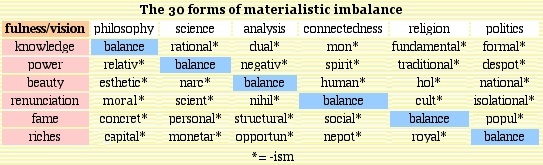
Meditation: serious consideration according to a plan. Leading the mind
back to the here and now. The conscious act of aligning the mind with
the (values, knowledge, individual and social reality of the) soul. As
with meditation a process of deconditioning is triggered, the energy
released by the process is usually bound by means of exercises: prayer,
bodily postures and rituals. The classical warning is that meditation
without properly binding the energy in accord with the ether and its
natural order of time, being released gives the danger of deranging
mentally and socially. The binding of the energy constitutes the
alternative to the abreaction which aligns the ego with the body when
unleashing the energy is done without a plan.
Filognostically we speak of five forms of meditation:
1 - the meditation
on the facts (here and now),
2 - the meditation on the principles,
3 - the meditation on the person,
4 - the meditation on the past,
5 - the meditation on the future.
The first form is the
ultimate decisive form (see also intelligence).
Miracle: An exception to the laws of nature escaping scientific
verification since it cannot be repeated at will but is dependent upon
the necessity of grace. Miracles form the proof of God a Lordship can
deliver as, scientifically taken, incidentally the power of time
conditionings can prove to be stronger than a law of nature. Also the
power of magicians depends on the ability to manipulate the conditioned
expectations of onlookers by diversion and proper timing. This makes it
difficult to distinguish between miracles and repeatable tricks.
Another way to define miracles is to consider them as being an
imagination of reality itself ('reality itself imagines') proving
matter just to be a kind of thought; an idea akin to that of
quantum-mechanical indeterminacy.
Modes: there are three modes. They reflect the degrees of
experience of a player in the Game of Order. The three modes are: self-mode, ego-mode
and wisdom-mode. The modes represent the three basic disciplines of
filognosy. They are also called the modes of nature in accord with the
passion or movement, the ignorance or slowness and the goodness or
knowledge. Pick a mode and surf on to your mission to find an identity
operator. A third reference is formed by the three forms of divinity:
maintenance, creation and destruction. The vedic equivalent is called gunas (see pic.).
Neurosis:
literally it means to have weak nerves; it is the more or less chronic
state of being unsure of oneself regularly running into states of fear.
It is considered the normal state of consciousness of modern man being
confronted with the schizoid of the ego society caught in oppositions
which is therefrom effective. Often psychotherapy is mentioned as the
best cure, but it is generally doubted whether therapeutic discussion
will change anything to the schizoid condition of being adapted to
modern society. The filognostic cure means to develop another
consciousness of time thus managing a resistance against the normal
diseasing conditioning-force of material attachment.
Operators: basic identity functions
differing
to
the
levels
of abstraction and the degree of experience.
There
are
twenty-four
operators
(see the Game of Order: Levels).
Opulences: the six forms of fortune which one, as the means of
knowledge, has in mind in the defense of the six visions of filognosy.
To each vision belongs a specific means of fortune: philosophy (the
method of arguing) builds on knowledge. Science builds on power,
the
grip
of
a
paradigm or of an instrument of measurement; analysis
builds on the ideal division, the beauty and harmony; the
connectedness of spirituality builds on the renunciation; the
religion or religiosity builds on the fame; and the comments or
the political builds on the riches (see picture).
Linking an opulence to
another vision results in the form of the imbalance of an
-ism, a materialistic, one-sided notion, a folly making for a
compensation which is unstable in society. One is corrupt with the
opulences if one takes these means of knowledge for ends. Balance
though with the opulences results in the six cultures to the defense
thereof which (only taken) together constitute the integrity of
filognosy: Hinduîsm (the culture of knowledge),
Buddhism (the cultivation of sobriety): Taoïsm (the
culture of harmony in duality), gnosticism (the culture of
spiritual renunciation and unification in between the scientific and
the culture of the person), Sufism (the culture of the
integration of the religious) and Vaishnavism (the actual
political culture of the comments to be integer - Vishnu - with the
riches - Lakshmî).Vedic equivalent: bhaga,
classical gnostic equivalent: pleroma.
Person: the self of logic and reason; the unity or integrity of the consciousness of time. In the second sense is the notion
of the person related to the concept of the ether.
The person is filognostically also known as the integrity of the
trinity of the soul, the spirit and the ego (pict.). The soul is the (in holiness) shared
selfawareness, the spirit offers the freedom of choice and he ego is
one's identifivation with one's self-interest, the I-awareness.
The personal constitutes one of the three basic vision in filognosy. The other two are one's thinking in favor
of the factual and one's thinking in favor of the principles. Filognostically consists the duality of the
personof the opposition between the church and the state, between the
personal religious experience of life at the one hand and the politics
of one's free expression at the other hand. These represent the duality
of the vision one has on the personal wich one develops with the
opulences of time: the riches and the fameas the knowledge means to
arrive at self-realization.
Vedic reference: purusha
The logic for the sake of, in the direction of, or towards the person
we call substantive.
The logic of thinking from the person out to the world or towards the
essence is called liberated logic.
Zie ook: Psyche| God| Visons| Tetrade en Triade
Prayer: A filognostic prayer is a mantra, or a sound vibration to
get rid of the ruminating mind. The mantra most primal and true for
every language and thus also of use in filognosy is the sound vibration
of AUM, the primal vibration uniting all other sound vibrations. The
basic prayer of vedic reform in filognosy says: 'truthfully (sathya) in
compassion (dayâ), austere (tapah) be faithful in purity
(s'auca)'. This is the text following the Sanskrit of the regulative
principles of uniting the consciousness in yoga
with the so-called vidhi. In summary it says filognostically (see also:
logo,
picture):
May peace with the natural
order, (pax)
rule the world in respect of the truth, (veritas),
sharing all with each in moderation, (temperantia),
faithful to the cause of unity (patria).
- Other filognostic prayers
are the great verses (great: can as well individually as
together, as well in silence as aloud be performed):
"With the Ether, with the
Time,
with each other, free sublime.
Sing together, listen, partake,
talking, down town, working, awake."
"Proper weighing,
non-illusion,
getting art, above confusion,
know the Best One, free expression,
all the six, is my confession." (Source)
The meditation-mantra
for the ether (expressed when one does one's
yoga-exercises):
"Aum..., earth, the ether,
heaven;
that vitality we pray for;
the grace of God for everyone;
the mind pure in harmony."
De vedic reference for this
mantra is the so-called gâyatrî-mantra.
And the food song, to be
expressed when one together partakes:
"This body itself ignorant,
the senses toiling not a friend.
The soul obscured in lusting first,
one's apetite a lasting thirst.
The tongue thus of one's body is,
most difficult to do of all that is."
"So good for us o My Sweet
Lord,
you grant this food to Your accord.
In self control now this tongue subdued,
will this food now by us be chewed.
Your goodness we owe this for sure,
the two of You graceful ensure:
For the Song, for Always,"
"With the Ether, with the
Time,
with each other, free sublime.
Sing together, listen, partake,
talking, down town, working, awake."
"The food of Love!"
"Cakra!" (filognostically
rephrased from the vedic vaishnav version)
a filognostic prayer is a
mantra. The basic prayer of vedic reform in filognosy, that following
the Sanskrit to the regulative principles of uniting in yoga with the
so-called vidhi speaks of 'truthfully (satya) in compassion (dayâ),
austere
(tapas) be faithful in purity (sauca)', says in
summary filognostically (see also: logo):
May peace with the order
of nature (pax)
rule the world in respect of the truth (veritas),
sharing everything with each in moderation (temperantia),
faithful to the cause of unity (patria).
Other filognostic prayers are
the great verses (repeated for clearing the mind):
With the Ether, with the Time,
with each other, free sublime
Sing together, listen, partake
talking, down town, working, awake.
Proper weighing, non-illusion,
getting art, above confusion,
know the Best One, free expression,
all the six, is my confession and the meditation mantra.
And the mediation mantra for
the ether (spoken when doing yoga-excercises):
Aum...,earth, the ether,
heaven,
that vitality we pray for;
the grace of God for everone;
the mind pure in harmony.
The vedic reference for the
latter mantra is the so-called Gâyatrî-mantra.
See the indian bhajans they're partly derived off.
See also: vow, meditation.
Principles: the rules of thumb for proper conduct in filognosy. They
are derived from the basic values and
constitute the basic commandments so to say. In the game and the
threefold of the filognostic disciplines constitute the principles the
nucleus of the spiritual discipline consisting of transcendence in
gnosis and consciousness of the duality in analysis. As the regulative
principles they stand for: no lies and no intoxication, no promiscuity,
no stealing, and no meat eating. As the fundamental values for our
humanity and the soul are they: truthfulness, cleanliness, penance and
compassion.
The principles prepare for the rules of the Game of Order:
• Respect the truth, no escapism.
• Stay loyal, do not abuse or cheat.
• Share what you have, do not gamble on any
profits.
• Respect all living beings.
Christian reference: the commands not to lie, not to kill, not to
steal, and not to covet.
Vedic reference: vidhi - satya, dayâ, tapas, sauca.
Profiteer: filognostic equivalent for sinner or fallen soul. To the
ideal of full selfresponsibility everybody is a profiteer taking more
than is returned. As with the classical concept of sin is taking profit
supposed to be the drive of moral consciousness: it makes one guilty
and obliges to pay moral and material taxes in the form of commitments
and money.
Psyche:
human self-reflection. Can be ego, can be soul. Also used for mind,
vital essence and spirit. The psyche is known to cover four departments
of reflection: thought, sentience, volition and action (pict.). See also under Soul.
Psychological time: the instability of one's time awareness. It
can be defined as the difference the clock makes with the sundial. It
is as such a quantifiable variable open to behavioral research. In a
wider context the term refers to the experience of timeless time or
sacred time. Absorbed in activities or meditating, one tends to forget
the time. Entangled in material activities one suffers the time. Thus
there can be instability in one's timeawareness. The instability of
ones psychological experience of time which results in the psychic
trouble of having symptoms of neurotic uncertainty and compensation as
found in the being entangled, are attributable to the cultural
framework of materialist society that manipulative with time makes for
an estrangement from natural time, resulting in cultural friction or
system stress. The cure for the negative of psychological time is found
in the cakra-order and the filognosy belonging to it which restores
one's natural consciousness (see also time).
Reality: State of being. To the soul God is the reality, to the
spirit space, to life it is time and to form it is matter that is
considered real.
The entirety of the manifest
reality we may consider, in accord with René Descartes, as a transformation of the ether, or of space with its material qualities
like Einstein defined the relative ether. That space-energy expresses
itself vedically, according the so-called 'purusha-avatâra's], as the three forms of Vishnu, ultimately in the manifestation of the
elementary particles that are controlled by the four fundametal forces
of nature fundamental forces of nature. Vishnu is the Bhâgavata Purâna considered the embodiment of the ether, the first effect of
creation. In that sense we know the reality as consisting of the cosmic
order (timespace), the universal order (outer space beween the stars)
and the local order (curved space around the luminaries).
The duality of the manifest
(''apara'') and non-manifest (''para'') of time, space
and matter, the 'holy trinity' of physics, constitutes the knowledge
means of the opulences which lead to the self-realization of man in
his six fundamental views. The time
constitutes the life of the universe, space is the classical realm of
the spirit en matter constitutes the objective form subject to analysis
and transcendence.
- Life: Time
constitutes the duality of the fame and the richesthat lead to the
religion and the politicsof the filognostic axis of the [[person]].
- Form: Matter
constitutes the duality of the beauty and the renunciation that lead to
the artistical and the analysis at the one hand and the transcendence
at the other hand of the filognostic axis of the [[principles]].
- Spirit: Space leads
dually
conceived
along
the
filognostic axis of the facts to the
intelligence and the power of the culture of dealing with facts, which
is known by the perspectives of philosophy (the methodical approach of
mindfulness) and science (the paradigmatic control with machines)
* Vedic reference: ''brahman'',
''prakriti'',
''purusha'',
''avatâra''
and ''guna''
See also: matter, opulences,
filognosy, modes, The Paradigm of the
Relative Ether (chapter 5
from the Pamphlet for a New Energy Policy), (5D)Kompaskwadrant (a spacial representation of the axes of
filogosy, pict.).
Schizoid: the mental state of being internally divided. It is
considered to be the state preceding psychotic derangement in which the
individual runs into a chaos of selfreflection. Also used for modern
society opposing against nature and itself running into the chaos of
warfare at times. Materialism, with its characteristic ego of
opposition, thus constititutes the breeding ground.
Schizophrenia: the mental state resulting from enlightenment without
discipline. It is considered a severe mental illness for which there is
no medical cure as the attainment of spiritual selfreflection cannot be
undone unless severely blocked by psychopharmaca making another hell of
existence. Resenting discipline and the authority belonging to it the
individual estranges from the spiritual reality, perceiving it as being
out of control and demoniac. These people were also called possessed by
evil spirits in the old days. Another way of defining it is the state
of being divided and deluded in one's awareness of place and time
having no sense of direction in one's life. Can also be called the
disease of delusion in the not-this-awareness of material
identification. The cure lies in acceptance of the spiritual challenge
and reality learning the discipline of aligning to the soul in the here
and now from a spiritual authority.
Soul: the self of the principles of humanity - not to lie, no
promiscuity, not to steal and not to kill; the definition used the most
is not the vague "essence of man"-definition found in the dictionary,
but the definition relating to selfremembrance (as in: 'I lost my
soul') and alignment ('a loyal soul'). The definition is dynamic, that
is to say, identified with life and the living; each moment the soul
redefines itself in the light of selfremembrance and conscience.
Philosophically is the soul considered the psyche or mirror of the self
consisting of reason, spirit, and desire and vedically it is divided in
the divinities of ignorance, passion and goodness with an individual
soul (jîva-âtmâ), a localized personal aspect
or a supersoul (paramâtmâ), and a god person of
opulences or fortune (bhagavân or the Lord). Often the
idea of continuation is introduced to stress the importance of its
eternal value and transcendence of physical death being remembrance not
per se located in the personal brain, but shaped in the form of a
cultural/biological trace ('my children are my life and soul', 'I put
my life and soul in that work'). Also the idea of invariability and
completeness is important to its, often religious, definition being the
cultural denominator founded in eternal values (truth, purity,
compassion and sobriety <pict.>)
that
transcends
the
individual
ego identified with the body. In sum its
definition could be: the stable and continuing conscientiously
remembering true self.
Spirit: the mind of the aligning ego; direction of the mind; also
compared to program. Described as life-giving and being of a certain
mood. Thought, a way of seeing, a conditioning (see further an article
about the definition of spirituality).
Sunday: the seventh or fourteenth day of a fifteenday fortnight
period that makes up one half month to either the sun or the moon. With
the sunday as part of the unit of measurement that is the week, is
there no way around, with the week as part of the next unit of
measurement the month, the intersection of days to keep the division of
time valid relative to the objective point of departure for the
measurements. The month as part of the year required a century that is
part of a millennium that is part of an aeon of millenia that lead back
to the beginning of creation. The issue here is whether we have an
unequivocal division of time in strictly defined units of measurement.
In a serious discussion about the order of time we thus cannot leave it
with the statement that a week consists of seven days; one also has to
explain how the week relates to the month and be clear on when we speak
of a first day of the week, only then does one know when it is a
sunday, a sabbath or a friday, taken purely linear from the beginning
of time.
Teacher/guru/filognostic: someone providing instruction in word
and/or deed and who thus, by showing love for knowledge - or by
modelling filognosy - forms and example of an intellectual, spiritual
or else clegical discipline. The teachers, all belonging to the
guidance in society (see identity) are set apart as to their source of knowledge and
their discipline of vision. The three sources are:
a) the books,
b) the teachers or the traditions lived out and
c) the equalminded fellow students.
Thus there are the teachers
of the intuïtion (the 'unseen' gods manifest in the sacred books,
vedical: the brâhmana's), the teachers of instruction
(the authorities, vedical: the sis'ya-gurus) and the
teachers of initiation, (one's elder brother or sister, one's father or
mother etc.; vedical diksha-gurus). The three disciplines are
those of:
a) the impersonal
(science; vedical: brahman),
b) the personal (the tradition, the religion; vedical: bhagavân)
and
c) the local here-and-now principle (of the mystic, de gnostic,
the esoteric, the meditative, the spiritual; vedical: paramâtmâ).
Thus one
has following nine teachers: three scientific ones, three
spiritual ones and three traditional ones. The three of science are: 1)
the therapist (the 'elder one', the educator, the counselor),
2) the professor and his intellectuals and representatives in
normal education, and 3) the 'Holy Spirit', the 'unseen', or
concrete of the positive homological mind (the thought we may piously
share and contain), or the sober sense of the knowledge handed down of
the natural science which, as a person, stands for the 'Creator'. The
three teachers of spirituality are 4) the new age teachers of
spiritual devotees, 5) the esoteric gurus, the spiritual
philosophers, the enlightened souls and the mystics, and 6) the 'Son',
the personality of Godhead the way we know Him from the scriptures as
the leader of this or that religion who takes away the obstacles, or is
the 'Destroyer'. The three teachers of the tradition are: 7) the
followers of the tradition or the believers (often also the
filognostics), 8) the priests and other teachers of example (âcârya's)
of
this
or
that
school of learning of a certain tradition, and 9) the
'Father' or the 'Maintainer' in the beyond, the Original Personality of
God.
Even though the filognostics
are usually found among the devotees of the traditions, or under the
believers, constitutes the filognostic the respect for and of the
integration of all these nineteachers. The impersonation of all these
teachers is called the Fortunate One, the Lord or the avatar, who is as
well the intuïtive as the manifest teacher, as also the pupil or
devotee. The 'normal' filognostic is always part of Him, of Him as the
Lord of, or the Integration of, the Filognostics.

See also the article on gurus at the Personal department.
Tempometer: a clock set to the sun. In a formal sense is it an
astronomical clock (zie also the webpage for it). The tempometer in filognosy represents the
mûrti, the idol, or the image of God,which also
constututes the problem, being an abstraction of the wisdom which one
behind it finds in words and realizations of a greater scope.
Thinking/thought/mind (Sanskrit: manas) the inner or
psychic weighing of interests or insights, with auditive or visual,
personal or impersonal, concrete or abstract, mental images or
cognitions according a certain logic or methodical order of
consideration, a paradigm or a certain causality; to engage one's
reason or mind; imagined communication; association of concepts or
mental images with or without ruminating and musing to direct it for
the sake of a result, a solution, a difference, an agreement or a
causal connection; the mental direction for the body from certain
motives, or else the response to sensual stimuli. The result, in the
form of internally perceived sounds in the ether, based on one's
identification with the body, or the false ego. The result measurable
in brain activity of the not in the here and now being oriented or
situated of the mind. The thinking not directed, viz. the thinking that
is not time-conscious meditating, contemplating, or else
god-consciously praying, runs, attaching itself to material matters,
with the desires belonging to it into thoughts of lust, anger and fear,
after which, with the resultant bewilderment of the mind, a state of
illusion finds its existence and thus a loss of intelligence can be
found. Thoughts may also surface in one's consciousness as a
consequence of the release of, the recall of, repressed or forgotten
memories, of as well intuitions as experiences. The forsaking of
desires will only lead to peace if it is directed for the sake of a
certain form of service to the interest of the soul. According rational
philosophy constitutes the occurrence of inner thought the proof of a
personal existence. According filognosy can one's thinking, next to the before mentioned, also be a
form of perception in the sense of receiving impressions or intuitions
from the input of a sixth sense, a basic element of existence close to
the connecting element of the ether, which, with or without mantras
functioning in correspondence, constitutes a basis for spiritual
unification (mantra is vedically derived from manas en trâyate:
to
free
the
mind;
see also causality,
spirit, soul, God, meditation and the conept of emancipation in which the authentic and selfresponsible
thought process is in fact the end result of the ninefold form of
progress trough its stages of the climbing up to and serving of the
true self).
Time: The succession of moments. Most soberly time is distance
divided by velocity as velocity is expressed in dividing the distance
trough time. For static objects time is thus an expression of distance.
To an extend ignoring a common speed the cultural concept of time
denying distance abridging it electronically is problematic as nor
distance nor the dynamics or consciousness of speed seems to be related
to the concept. Thus, psychologically, time is culturally known as a
conflict of identity in which the person is disoriented to the place of
timing and the true time of nature's happening. The instability of the
time-experience is called psychological time while the common motion of the spinning
planet indicates the true of time. Cultural time is known as clocktime.
The three concepts of time making up its total definition can be united
in the formula Tp=Tt-Tc. In straight language: psychological time can
be recognized as the product of the negative relationship - the
difference - between clock-time and natural time (pict.).
Vedically
one speaks of trikâlika concerning the threefold of time (kâla). Normally is the past, the present and the
future indicated by it, but there are other divisions associated with
it: the three repetitive four-monthly seasons of the year (winter,
summer and spring/autumn); the creative, destructive and sustaining of
time; the natural, cultural and psychological of time; the cyclic, the
linear, and the unity of the time and, more empirical and specifically
cyclic, the order of the sun, the moon and the stars (pict.).
Religiously
time is the (impersonal) form of God in its totality overruling the
existence of all living beings also giving order and peace being as
worshipable as the Lord Himself.
Scientifically the term is dually managed
reductionistic just referring to an absolute of measurement
(electromagnetic definition: Tc) or classically referring to the spin
of heavenly objects (the dynamic definition: Tt).
The filognostic definition stressing the more
ethereal, psychological nature of time ends the dual conflict of
scientific denomination by simply describing a practice of respect for
the sake of consciousness of both the concepts of scientific time. Thus
the psychological problem of time-identity is solved (see also psychological
time).
Philosophically is the time, with the
temporal, by definition the constant movement of the unverse which,
making difference to the place, is the moment that is always the same.
Thus is there the existence of the oneness of the ethereal moment, but
not the simultaneity of having the same time.
Transcendence: to rise above; to be conscious elevated
above the senses; to identify with the witnessing above the duality of
the sensual; freedom of choice; here and now-consciousness. The
transcending is essential to filognosy in order not to get entangled in
the ego of the societal identity which consists of someone's civil
status and vocational orientation. By evolving the function of the ego
at a higher level of abstraction in a process of emancipation, is the
falsehood of the being identified averted, countered, relativized or
liberated. Of transcendence one has the freedom of choice, so that the
person can exercise his free will, if not, is then spoken of attachment
in service of the senses. One transcends in service of the principles
of the soul. The false ego is known in the form of the political
parties which with the civil virtues are of opposition with the fields
of action. The individual soul or the true ego is spiritually known in
meditations and politically known in the election groups which concur with the at a higher level
being balanced with the assuming of responsibility for the sixteen
different civil identities. There are eighth levels of transcendence:
the one of lust, of exercise, of execution, of socializing, of helping,
of talking, of understanding, and of controlling. They are derived from
the eight limbs of the science of uniting one's s consciousness (the
yoga): the vow,
the regulation, the poise, the breath control, the turning inward, the
concentrating, the meditating and the absorption (vedic: ashthânga,
the
eight
limbs
of
yoga).
Uniting: filognosy
knows
many
forms
of
uniting in the social/ideal field of public
associations; especially sportive and religious (see fields of action). To unite one's consciousness is, to the
three forms of yoga,
known
as:
• one's uniting in labor (karma),
• in voluntary labor (upâsana) and
• in spiritual knowledge (jñana).
Succinctly said comprises uniting in filognosy prayer, labor and
knowing. Upâsana is the vedic term for dedicated,
devotional activities or bhakti. In terms of labor is it also called akarma
(not to work, 'unemployment', charitable activity, unmotivated labor).
There is an illegal fourth form of uniting oneself in doing work and
that is to unite in adharma or unrighteous acts, in other
words, in crime. Vedic it is called vikarma.
Sexual uniting, tantra.
To
unite
in
sex
is vedically called tantra yoga or simply
tantra. The use of this term next to the alternative vedic meaning of
'ritual text' (see New Oxford American Dictionary). Classically
is tantric sex, in which one is focussed at meditation and not at an
orgasm for that matter, divided in three:
• heroic (vira) different partners, but less attached.
• animalistic (pas'u) faithful to one partner, but more
possessive.
• divine (divya) only sex for offspring, the rest is subliminal
But filognostic we discriminate five forms of sexual behavior on which
one may meditate to unite body and spirit.
• liberal - see above heroic (because detached) or simply
promiscuous and unfaithful.
• loyal - see above: animalistic or simply monogamous and
faithful.
• holy- see above: divine or celibate.
• passive - arbitrary sex in dreams and sex passively lived
initiated by others, or meditative without any hankering for it.
• deviant - perversions, fantasies, masturbation, homosexuality
(see pic.).
To unite in sexual activity belongs, on the basis of the regulating principles and the values, for the active types, to the spiritual discipline.
Religious is one either inexperienced, passive sexual minded, of holy
of self-control and intention. The rest of the not abiding by the rules
and regulations with the sexuality,is then abuse and a sin religiously
spoken. Filognostic we then speak of profiting which necessarily must
be atoned for (religiously: penance or tapas). To be Holy of
control, but go without dharma or discipline, in other words desirous
after enlightenment but not willing take responsibility, leads to
demoniac possession (to the falsely uniting of oneself, see also vikarma
above and schizoid, and schizophrenia).
* Vedic equivalent for the
threefold of yoga: kânda (lit.: section, part; see
further the articel 'Time for Sex').
* The purity of the uniting
in ''divya tantra'' is called ''s'auca''.
Values: the basic concepts of fundamental importance in filognosy.
The moral basis of the Game of Order and the regulative principles. Opposed to the animal values of eating, mating, sleeping
and fighting, are poised the apollonian values of the person endowed
with reason and logic. Filognosy therewith bases itself upon the vedic
formulation of the values of yoga as expressed in the vow of yoga (yama),
of
nonviolence,
love
of
truth, non-stealing, celibacy, and the not
striving for possessions (ahimsa, satyâsteya,
brahmacârya aparigraha yama). The regulative principles directly associated with these values are
founded upon the conception of Vyâsadeva concerning the yama
yoga-values of vedic knowledge in the form of the four legs of the bull
of dharma: satya, tapas, sauca, dayâ, or love of
truth, penance, cleanliness and compassion. These are your basic
commandments. Not the usual ten commandments thus, but just these four
will do for starters; these are the basic ones.
Truth
The first principle
of truth, satya, is a matter of respecting the facts of the
creation as they are. Non-illusion is the purpose of the science and in
that context we already discussed the issue of the time you need to be
in control with yourself. It also implies that you do not flee from the
truth in taking to alcohol, drugs or other intoxicants. Even caffeine
coffee and black tea, brown chocolate and soft-drinks containing
stimulants should be checked. You have to see things as they are, not
have any artificial stuff manipulate you into a fake happiness. Let
your bliss be real. It is also wise to read the scriptures regularly
like listening to the Bhagavad Gîtâ each morning before you do your job. Do follow the lead of
the classical truths of wisdom. Lasting they proved to be eternal. The
absolute and lasting eternal truth of the reality that you can't
change, of souls, the material elements, the ether and the time,
outweighs the relative truths of the cloud of thoughts to the matters
and forms that depend on your control. Thus we already arrived at the
respect for the natural order as the way of transcending the times of
fruitive labor that were conjured up by man. The ancient wisdom is all
based on that natural order.
Purity (faithfulness)
The second rule is
that of purity, s'auca. It usually means the acceptance of
sexual frustration or celibacy, whether you're married or not; but it
is also synonymous with dâna: sharing, communicating and
donating. Sexual frustration is a normal thing, not just for human
beings. Animals grow horns and bushes of feathers with it and human
beings develop culture with it. But don't get me wrong, sex is not bad.
You simply have to keep that dog and apelike body on the leash. First
of all you are a human being or individual soul in respect of the
Supersoul of God above that is above all that, that is the purity to
share. But purity is more than celibacy and sharing. It also means that
you keep the mind focussed with the mantras we mentioned. Beware of the
ulterior motive. Lust inspires too and distracts the mind. Lust
requires regulation, denial doesn't really help. Sex is good if you are
in love and want to let nature take its course. That's how we get
children. But as a habit, a compulsion, a kind of fun, and a mechanical
thing you should deny it; it is not really the sharing anymore, it is
selfish and destructive then. Do not spoil the natural with such a
dirty mind or stone of attachment in your heart. And finally purity
also means cleanliness of course. mental as well as physical. Not just
no dirty and distracted mind of desire, but also always washing the
dishes, having clean underwear every day, taking a shower each morning,
washing after defecating, washing before going asleep, brushing your
teeth three times a day thoroughly and doing the laundry regularly as
well as household chores. Thus is s'auca also all the cleanliness. The
mental and physical purity, sharing and all, is your loyalty or else
you are unfaithful in betrayal and fall-down. Believe in it.
Penance
The third principle
is that of penance, tapas. There is voluntary penance and
enforced penance. Better not wait for God or fate to impose the penance
upon you. With everything you do you must know to stop; even with the
stopping you have to stop, like it is with the duty to get out of bed
at night to urinate. Not being able to stop factually means not being
able to engage properly also. That's how the car works that your body
is. This drivers license of penance is what you need, so to speak. That
is the control you need with th ether and thus we have the need of the
order of time again. So for your eating, there is fasting: every night
you do so and you also fast every fifteenth day on the cakra-calendar so that you don't fast on a day of
socialization (going out, doing the field of the false ego, when you
have to show your face), which, formally, is the seventh and the
fourteenth cakra-day or a 15-day period of two weeks of labor
consisting of six days of work. Fasting is best done by not eating at
all, just drinking water, milk or fruit juice. The body so to speak.
has to be switched to the reserve-position so now and then. In order to
stay healthy you have to flip that switch regularly with a good
schedule. Overeating is one of the great problems of modern society.
People consume, with a false, conditioned cry of hunger, but do not
have it under control just like that. They develop all kind of diseases
because they forgot to switch on reserve. You also eat leftovers in the
fridge don't you? This is the same. Clean the fridge, eat from your
reserve of fat and so for a day. Further does penance also apply to
actions, especially fruitive labor. On cakra sundays of socializing, on
lunar signal-days of study and/or religious celebration and on solar
leap-days (the fifteenth cakra-day and the two-monthly extra day to
leap the cakra month) you shouldn't engage in any productive or
fruitive labor. But remember, self-correction activities are of all
days, just like your parent had to correct you every day. And also be
careful not to torment the body with fasting too long, not sleeping
enough or other forms of self-denial. It is all a matter of regulation
in such a manner that is pleasant and natural to you. Normal eating is
also restricted to the times set for it. With proper regulation you
don't tire yourself and thus you don't have to sleep that much. A
mother not caring properly for her child gets a nagging child that
wears her out. So considering what we above called proper in
filognostically not wasting your life on ulterior motives, always try
to follow the natural order in this: the lunar and solar days and the
clock set to the sun; the authority of nature is the proper one, the
dharmic one, the rest is compensation of a lesser quality. Failing in
this more conscientious self-regulation you will sooner or later have
to pay the price of an enforced penance. You'll get sick or otherwise
be plagued by your psyche or by turns of fate. E.g. during a war you
can recognize what happens as an enforced penance: the fun of consuming
is over, everything is rationed then, everything is rationed then, or,
in other words, the penance of sharing must be imposed. Penance is, not
taking more than one needs, thus also sharing. So stay ahead of fate,
make it your free will of wisdom. You know better.
Other necessary penances
are fasting of dairy for a month (May e.g.) and refraining from the
tube, from t.v., for at least one day a week in order to decondition
from that dictatorial defiance of the local principle. The greek
Ulysses also had to stick to the sheep (the local community) to escape
the cyclops (the t.v.) that held him captive. That, conditioned as you
are, might not be easy without an alternative calendar and clock; the
system tends to eat you up and allow you nothing outside of it. You
need a system to defeat a system, to defy a system.
Compassion (nonviolence)
Certainly a good
yogî is a compassionate man. He recognizes his self-interest in
that of others and suffers when others suffer. So he helps. That is
compassion, dayâ. I must be stupid to enjoy another man's
suffering. Don't wish or accept for others what you don't want for
yourself. The law of karma is that of action and reaction. All will
return to you. You end up in the world you've built yourself. So they
say: aim for heaven and a better world. But of course it is this world,
but then done better. The better is containing the good of the
foregoing in non-repression; what's a tree without its roots?
Compassion is the peace-principle, that is how the human cause is doing
justice. Compassion is the nonviolence principle. Meaningless self
destruction is the killer of all faith. Unnecessary violence should at
all cost be prevented. It is bad enough to be of necessary violence,
defending yourself, with the weapon of your enemy. The Gîtâ
(2: 32), wherein Lord Krishna summons his friend
Arjuna to take up his arms and fight says it this way: 'blessed are
those who see it coming, to them the kingdom of heaven.' Also important
is to be of charity: give the ones needy what they ache for: food,
shelter, clothing, security and other basic necessities. See to it that
no one has to complain. So this principle naturally follows the
previous one. Without sharing and helping human society is not human at
all, but heading for self-destruction. The four principles as mentioned
define the humanity, not so much the animality that is the weaknesses
with them, that deceives, kills, is promiscuous and steals. Last but
not least there is the compassion with other creatures. Also with them
be nonviolent. It is not necessary to kill animals for food. The joy of
life you grant them will be yours if you let them live their full life.
You don't kill your mother if she doesn't feed you any more do you? So
why kill mother cow then when she's too old to give any milk, isn't
that immoral? Also let other animals live. Share in the joy of life,
not so much in the lust for life, that is the way of God. Avoid
unnecessary violence. Again I say beyond necessity you're a fool
falling down in hell step by step.
In fact is there in filognosy
a link between the values, the regulative principles, their political
reality and their virtue. Its reality consists of moderation,
preservation, regulation and compensation. Their virtue consist of honesty,
loyalty,
sharing
and
helping. The virtue of the values constitutes
the filognostic
vow of truthfully and
faithful I promise to share and care' (filognostic
confession art. 167), and
also makes for the rules of the Game of Order (see mainpage). The reality of it constitutes the
filognosic policy as is common in our modern democracy as a standard of
good sense. The regulative principles constitute the spiritual rules which are there to ascertain
the humanity and the concept of the soul
(see also the picture).
See also: views; civil virtues; sarva-dharma values; the prayer of filognosy; the basic Confession of Filognosy; The Filognostic Manifesto.
Views ('points of view, vision, philosophies, darshana's)
A vision, or point of view, means that one, depending a certain
culturally transmitted form of knowledge, in one's service to it, with
a personal positive perspective on it, is freed from a type of
individual work load, which as well genetically as culturally is
inherent to a continuing soul - or self of principles - , being a
witness of changing material conditions.
De syncrecy of filognosy, or the mutually favorable translation of the different
humans points of view in the love of knowledge, has as its result that
the basic notion of it is embedded as an atom in between the two most
salient human views in life, religion at the one hand and science at
the other. The international renown dutch scientist and expert in the
gnostic field, Gilles Quispel,
formulated gnosis as such indeed (see pict.).
A third point of view which to this emerges in the
filognostic predilection for comprehension, is the one of methodical
considerations, of philosophy, relating to the human and greater of
nature as a part of the interest of the factual of science, and a
fourth point of view is the one of modern democratic politics in which
the comments and insights of enlightenment in response to a more
traditional, religious and social cohesion and dogmatism, arrives at a
selfresponsible, practical and societal lead. For gnosis,
filognostically seen, can't be mere thinking. Filognosy thus being
complete as a special, extended form of gnosis, as a form of
spirituality around the regulative principles - the translation of the basic human values into rules of conduct -, consists more
narrowly and principled taken, itself, dualistically seen, at the one
hand then of:
1) A vision which
describes the relation between spirit and matter, between teacher and
pupil. This we call the analytic relationship which figures for the
fundamental duality of spirit and matter which in the love of
knowledge, in filognosy thus, also entails an artistic and
educative/therapeutic mission to express and transmit harmony and
beauty and bring about and reinforce physical and mental well-being.
2) At the other hand is
there gnostically the spirituality as a culture for its own sake of
being not just a form of transcendental knowing or disecting in
dualities and elements, but also being a discipline to arrive at
stability and happiness with that transcedence.
Traditionally religious had
the monks that discipline for Christinality in their grip with the rule
of Benedict: obedience, poverty and chastity combined with a vegetarian
diet. In the twentieth century conversant with more spiritual teachers,
awoke Christianity to the notion that this rule was the spitting image
of the vow of yoga (the yama) as we know from Patañjali.
Thus continuing the argument
intuitively are we in summary dealing with the six different visions in
and around the concept of filognosy. The filognosy, which 1) to the
principle of the duality of spirit and matter is called analysis
and 2) to the transcendence in the discipline consists of the spirituality
of a certain connectedness therein, thus also aims at two points of
view more that are directed at the person: 3) the politics of
implementing the commentaries and 4) the religion of the
service held to the honor of the hero or the sainly person, and knows
further next to that two more views that are directed at the facts of
5) the philosophical line of argument of the, to the method,
rationally being engaged with our nature and 6) paradigmatical
science seeking unequivocalness with it in models of thought and
methods of measurement. In India we retrace these six points of view in
the so-called darshanas.
The darshana's: they
are the six systems of indian philosophy, syncretically considered to
be complimentary rather than contradictory, despite of the diverging
and sometimes contradictory nature in formulating their tenets with the
concepts of âtmâ en brahma (see
also 12.13: 11-12). These orthodox views have in common, together with the
heterodox religiosity of the Buddhists, Jains and S'ankarists which
rose in opposition with them at the time Christianity was founded a) the upanishadic notion of the cyclic of time in yugas en reïncarnations and b) the concept of moksha or liberation from rebirth by means of emancipation and
transcendence. The six are often taken together in the three
fundamental dualities or basic visions of philosophy: the approaches of
nondulaity and method (the scientific), the analytical and connected
(the spiritual), and the ritual end exegetic (or religious). There is
also a notion of progress in emancipation from high to low in this
order of appearance.
* A: to the facts:
- 1 De Nyâya-vision of the methodical approach. Filognostically are alse
included here philosophy in its entirety with for its perfect balance
the spirit of hinduism itself in which these philosophies constitute
the nucleus.
- 2 Vais'eshika, the atomistic, undivided, vision of reality fee from
illusion. Paradigmatically a model of science, a system of measurements
or a science.
* B: To the principles:
- 3 The Sânkhya-vison of analysis in tattvas as opposed to the purusha. Also the arts belong, filognostically seen, to this
department of filognosy.
- 4 The vision of Yoga
of transcendence in meditation in eight 'limbs ' or angas.
Filognostically culminates the yoga in Christianilty in gnosis. It is
the transcendendally being connected in spirituality.
* C: To the person:
- 5 The Mîmâmsâ-notion of settled ceremonies and ritual
services. The normal religion. To this department belongs, seen
filognostically, also the autobiography and other en personality cults.
- 6 The Vedânta-vision of summarizing and locally the to time and place
adapting transcendental commentaries on the purâna, itihâsa and upanishadic literatures. Filognostyically belongs to this vision also
the political order.
- Nyâya and Vais'eshika are part of science, the way we also know it in the West; Karma-mîmâmsâ can be recognized in the practices of the
civil Hindu with his mandirs and pandits, Yoga
is the popular version of the spiritual discipline of connecting
oneself with the Absolute and the analytical of the Sânkhya vision is incorporated in the vedântic uttara-mîmâmsâ approach we in the West know as the Hare
Krishnas (see also Kapila and yoga;
Wikipedia-Hindu philosophy).
What the visions have in
common: it is so, as it is with the original darshana's, that they, to the description of what a
vision contends, have in common:
1) The notion of a
constant and continuing self or a soul
(vedic: âtmâ ).
2) The concept of the cross or the workload to be carried by an
individual, a family or a nation (karma).
3) The perspective of a solution of being liberated in service (moksha).
4) The recognition of an authority, of an established culture of
scriptural reference (paramparâ).
See for the
western-philosophical aspects of the visions furthermore the discussion
of classical
reference
under
filognosy
(see further under logic, disciplines and materialism).
Vow: the vow of filognosy 'truthfully and faithfully I will
share and care' is derived from the great vow of yoga: yama, as well as from the basic values of humanity in the dharma of uniting the consciousness. On these values and thus also on this vow are the rules based of the Game of Order (see also: prayer, principes, and confession article 167).
Yoga: vedic term literally meaning uniting or unity. It's about
the uniting of one's consciousness. It is filognostically the
discipline of spirituality leading to stability in wisdom (gnosis),
bliss and consciousness.
One discerns many forms of
yoga, but one mostly speaks of a threefold (trikânda)
consisting of:
1 bhakti yoga,
the
yoga
of
devotion,
2 jñana yoga, the yoga of knowledge and
3 karma yoga, the yoga of labor.
Hatha yoga, is what
popularly is meant with the term yoga, it is the uniting of the forces
of the body by means of postures. In that context one also speaks of
the eightfold ashtânga yoga consisting of the eight limbs
discussed underneath. Raja yoga, a specific school therewith,
is a part of that again. Aadhar yoga , the yoga of Anand Aadhar, literally the foundation of happiness, is the integral
appraoch of yoga in the sixfold notion of filognosy.
Yoga is the nuclear
discipline of Hinduism, referred to in all holy vedic scriptures (s'ruti
and smriti), and is formally an integral part of the six philosohpies of India, the darshana's. See further uniting.
Basic values: the
basic values of yoga in which one achieves control by fortitude and
detachment (abhyâsa and vairagya), are known as
the legs of the bull of dharma or the vidhi: they are satya
(truth), dayâ (compassion), s'auca (cleanliness)
and tapas (penance). These values are implemented in filognosy
as the foundation for its moral reality, principles and virtues.
The vow of yoga: the
basic confession of penance in yoga is called yama it says in
Sanskrit: ahimsa satyâsteya brahmâcarya
âparigraha yama; it means nonviolent, truthfull, without
stealing and celibate, not striving for possessions.
Angas, as levels of
transcendence: the eight levels of transcendence one speaks of in filognosy are derived from the eight angas
or limbs of yoga:
Like in yoga first respecting
the don'ts of the vow to follow these principles (yama) and
following the do's of regulating the activities as discussed (niyama),
after
which
you
sit
in postures (âsana) to regulate your
breath (prânâyâma), turn inward (pratyâhâra)
and
concentrate
with
a
mantra (dhâranâ) to meditate (dhyâna)
and
find
absorption (samâdhi) and stability in the self,
is also your whole life in filognosy a process similar to such an
individual exercise. One should not think all too linear about the
following enumeration.
- 1) Yama-level:
At
first
you
may
be pretty physical being young and eager to build a
life, attracting others and showing off. The beginners level is
wrestling with the vow of yoga to be pure in this being nonviolently,
truthfully, non-possessive and not stealing of penance in celibacy,
even in marriage.
- 2) Niyama-level:
At the next level or field of respect in transcendence, you wrestle
with the order of a regular practice. You should study, be clean, serve
the cause, sacrifice, be hospitable, be content, be charitable, be
faithful and be of attendance. This takes some time to settle in your
life balancing to the order of time. It is like a sport you practice to
integrate your actions. Difficult in the beginning, but sweet on the
long run.
- 3) Âsana-level:
At
the
next
interest
of transcendence you learn to develop the right
attitude of service in control of the body. Experimenting in
competition, competing with the weaker approach of your previous life,
you have to learn to cooperate, to cooperate to the general directives
of the classical science. Next to the poise of meditation to control
the physical energy, it is the poise of life in general also that you
develop being a good sport in command of the dog that is your body. It
is not as easy to master yourself as it seems. It requires the vow and
exercise of the level before this one. You have to practice the
austerity, develop the attitude and thus be in control.
- 4) Prânâyâma-level:
The
level
following
you
learn to use your breath to concentrate. In the
reality of life this usually is the breath you practice controlling
your speech. You have to say the right thing to find intimacy with
others, get married and be a reliable partner in control with himself.
So there you are again; in order to build and keep relations, you need
the vow, the regulation and the control over the body as a
precondition. Now at this level, in this field of yogic interest, we
get above the waist so to say, from the private going public and do we
morally directed with the body under control build a formal society of
accountable and faithful people.
- 5) Pratyâhâra-level:
Next
level
is
the
level where you turn inward. You can't fix yourself
on the diversity of the outside word only and stay concentrated, stay
focussed on the cause of a happy life for all. Now you have to develop
meaning in your relations. You have to concentrate on that and be
responsible, accountable, trustworthy, as a beacon of clarity to be a
meaningful other. One might think yoga is a selfish practice of turning
turning inward, but filognostically you realize that you cannot develop
any quality without the meaning of the soul being the reality of values
and God that you share with others. Even the strictest yogî
trying to meditate in the forest for enlightenment has to build a life
relating to his environment in such a manner that a certain quality is
achieved that is love and peace for all of life outside and inside of
him. The meditator cannot separate himself from life. He is life and
sees it equally everywhere around him, that vision of the soul is the
concentration on the inner reality that is needed. In fact one gets
more real being deeper making sense with other living beings, not more
distant being an escapist and stranger on the run for social
responsibilities. 'Let this yoga not go at the cost of prescribed
duties' writes sage Vyâsa in the Gîtâ. So one
concentrates on the soul in keeping in touch with others by
appointments to the original order of time and thus you make life
meaningful, thus you make a difference. This level is crucial, here one
cares, settles and loves as the filognostic, as the person of
comprehension, with a heart that you have to be alive with being real
with the yoga.
- 6) Dhâranâ-level:
Further
transcending in emancipation knowledge starts to count. To have a more closely defined
agreement with yourself and others to assert yourselves, discuss and
contemplate, is crucial for the society you're part of and have to
learn to take responsibility for. This is the actual concentration that
makes your person and life. Taken strictly individual it is the
practice of mantras, succinct sayings of your wisdom and experience.
But with others together in agreement being of service to the
filognostic cause and modeling that for others you have to concentrate
on everything conducive to the humanity and the justice for all living
beings and the whole planet. That is the enlightened self-interest
thereof for which you must assert yourselves in discussions and learn
to contemplate matters in focus.
- 7) Dhyâna-level:
After this follows the meditation in which one arrives at understanding, at know-how. Now it
is serious business, a science of acting without acting; of directing
without directing. You learned to have a heart and be a model. Now, in
order to be a quiet witness, you have to investigate and doubt what
would be contrary to the cause. Now the concentration is in function.
Once having realized this more detached position of being more of a
quiet witness, you attain to the next level.
- 8) Samâdhi-level:
What
follows
as
a
consequence of the vow, the regulation, the exercise,
the practice, the relations, the heart, the assertion, and the
understanding, is the absorption of selfrealization wherein the
unwanted finds destruction, the wanted is created and the culture
reaches it's celebration in maintenance. As a seer finding stability in
the moment of the here and now with the ether in this position of
transcendence, constitutes the practice of being a full human being in
everyday life in respect of the fields being balanced with the
principles. It is not to be renown as such; one may very well in the
background with the traditional lordships of creation, destruction and
maintenance be ruling the business of the wisdom and transcendence. In
this last stage is what matters the stability of your being absorbed in
the blissful, the durable and the conscious of one's being connected in
the yoga.
One may go from low to high,
from the ethereal to the material, with these levels or areas of
interest of the eight-fold yoga in your life climbing to heaven, but
equally you may descend to be of concrete actions and presence this
way. This ability to go up as well as going down is the
(âroha/avaroha) quality of having matured in filognosy, of having
that love for the knowledge that you and the rest of this world need to
survive, be motivated and rejoice (see also uniting, values, principles; The yoga-sûtra's of Patañjali
read).

|